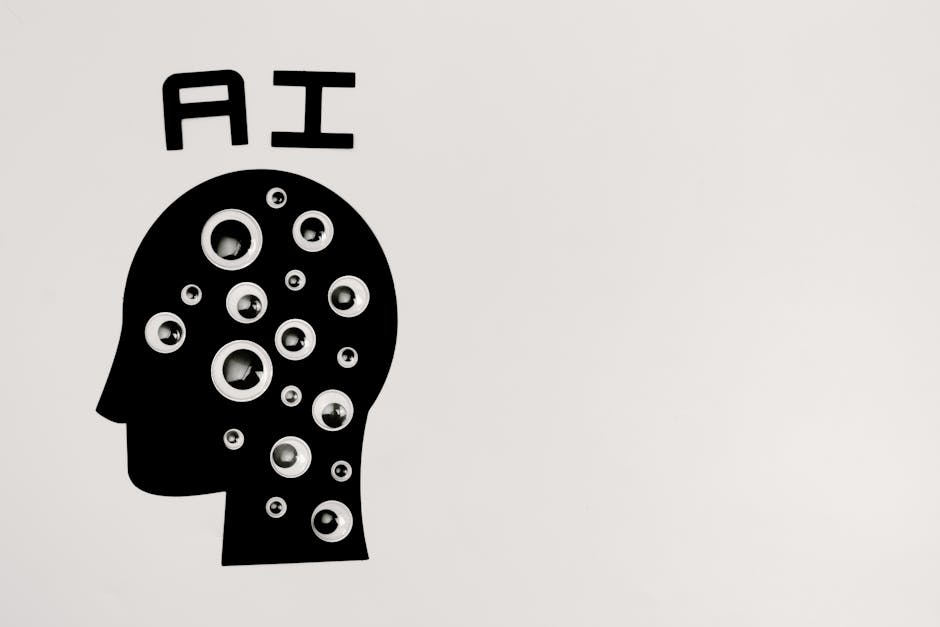
Healing AI Shame: Why Smart Employees Hide Their AI Use
TL;DR
- •AI shame is the psychological barrier where employees hide AI usage or struggles due to fear of judgment.
- •It creates a 'shadow adoption' gap that prevents team-wide scaling and process optimization.
- •Solving it requires moving from a culture of performance-masking to a 'Augment, don't replace' mindset.
After watching dozens of founders try to force-feed AI tools to their teams, my conclusion is that the biggest barrier isn't the software—it is the quiet, paralyzing fear of being perceived as obsolete or 'cheating.'
The Three Layers of AI Shame
AI shame typically manifests in three distinct ways within a mid-sized company:
- The 'Liar's Pivot': An employee uses Claude to draft a 1,000-word proposal in 10 minutes, then waits 4 hours to send it so they don't look like they are 'slacking.' This prevents the manager from knowing the actual work capacity of the role.
- The Competence Trap: Senior employees, often used to being the 'smartest in the room,' feel embarrassed that they cannot figure out prompting. They stay silent while juniors outpace them.
- The Cheating Narrative: A pervasive sense that using AI is 'cutting corners' rather than 'leveraging leverage.'
Tool tip (Course for Business): Our 5-day corporate AI program explicitly tackles the 'cheating' narrative by implementing our Augment, don't replace methodology. We teach teams that the person who uses AI to double their output isn't a shortcut-taker; they are an architect of their own efficiency. By the end of the first session, every employee creates their first automation in a group setting to normalize the practice and dissolve shame through collective action. See how to book a 30-minute call to map your team's first week: https://course.aiadvisoryboard.me/business
How to Build a 'Shame-Free' AI Roadmap
If you want a corporate AI rollout that actually impacts the P&L, you cannot rely on mandates. You must eliminate the cost of being honest about AI.
- Declare a Shadow AI Amnesty: Explicitly tell the team that you know they are using AI and that there will be no penalties for revealing 'unofficial' shortcuts. For more on this, see how to conduct a Shadow AI Amnesty.
- Shift Focus from Output to Outcomes: If a sales rep hits their quota using AI, celebrate the quota, not the 'effort' of manual writing. If you don't reward the speed, they will hide the tool.
- Deploy AI Champions (1:15-20 Ratio): Instead of top-down training, appoint internal peers to show how they use AI. It is less intimidating to learn from a colleague than to be lectured by a consultant.
Manager scan (what AI champions report after week 1)
- Adoption Rate: Percentage of the team that has logged into the official toolset.
- Sentiment Score: Anonymous rating of how 'safe' the team feels sharing AI prompts.
- Workflow Wins: List of 3-5 specific tasks that are now 50% faster (e.g., JD drafting, daily reports).
- Struggle Signals: Common areas where users are getting hallucinations or 'bad' results.
- Prompt Density: Average number of interactions per licensed user.
- Champion Feedback: Summary of peer-to-peer training sessions held during the week.
Micro-case (what changes after 7–14 days)
A founder of a 45-person marketing agency noticed that despite buying 45 seats of ChatGPT Team, the 'time-to-deliver' for client briefs hadn't moved. After a 5-day intensive focused on 'Augment, don't replace,' several senior strategists admitted they were embarrassed to use AI because they feared their high salaries wouldn't be justified if a machine did the 'thinking.' Once the founder made it clear that 'thinking' meant prompt engineering and quality control, not typing, the agency saw a typical 30-40% reduction in production time across most departments within the first month.
Note on this case: This example is illustrative — based on typical patterns we observe with companies of 30–500 employees, not a single named client. Specific numbers are rounded approximations of common ranges, not guarantees.
Tool tip (Course for Business): To avoid 'pilot purgatory,' we recommend a Shoulder-to-Shoulder hot seat approach during the first 6 weeks of adoption. This involves high-visibility sessions where leaders share their most 'failed' prompts. This vulnerability kills AI shame faster than any policy document ever could. Learn more at https://course.aiadvisoryboard.me/business
FAQ
Q: Is AI shame common among C-suite executives? Yes. Executives often feel they should already know these tools and avoid asking for AI Literacy Basics to save face. This leads to a lack of executive sponsorship, which can triple the failure rate of the rollout.
Q: How do we tell the difference between 'cheating' and 'augmenting'? There is no 'cheating' in business if the quality and compliance standards are met. If the output is accurate and delivered faster, the 'how' is secondary to the outcome.
Q: Should we offer bonuses for AI adoption? Incentives can help, but if the underlying shame is not addressed, employees will simply 'fake' usage to get the bonus without actually integrating the tool into their workflow. Focus on psychological safety first.
Q: Can we run this training internally? You can, but often an external 'Shoulder-to-Shoulder' session helps break the existing power dynamics that contribute to the shame in the first place.
Conclusion
AI shame is the silent friction that prevents your team from becoming an AI-native organization. If your people are hiding their AI use, they are also hiding their efficiency gains, leaving you stuck with the same overhead and no competitive advantage.
Your first step tomorrow: Share a 'bad' prompt or a project you completed with AI in your team Slack channel. Normalize the leverage, and the results will follow.
CTA: If you want every employee to ship their first AI automation in five days and eliminate the 'cheating' narrative forever — book a 30-min call and we'll map your team's first week: https://course.aiadvisoryboard.me/business
Frequently Asked Questions
Ready to transform your team's daily workflow?
AI Advisory Board helps teams automate daily standups, prevent burnout, and make data-driven decisions. Join hundreds of teams already saving 2+ hours per week.
Get weekly insights on team management
Join 2,000+ leaders receiving our best tips on productivity, burnout prevention, and team efficiency.
No spam. Unsubscribe anytime.
Related Articles
Corporate AI Shame: Why Smart Teams Hide Their Best AI Workflows
Is your team hiding their AI usage? AI shame is a hidden psychological barrier where top performers conceal efficient workflows to avoid being seen as lazy. Learn how to surface these secret gains and build a culture of open automation.
Read more
Confronting AI Shame: The Hidden Drag on Corporate AI Rollouts
AI shame is the silent killer of corporate adoption, forcing employees to hide their AI usage or struggles for fear of being replaceable. Learn how to build a high-trust culture that encourages human-AI augmentation.
Read moreAI Shame: Why Smart Teams Hide Their AI Struggles
AI shame is the unspoken reason corporate AI rollouts stall: employees hide their struggles, fake fluency, and avoid tools rather than admit confusion. Learn why it happens and how to design training that makes struggle visible, safe, and productive.
Read more