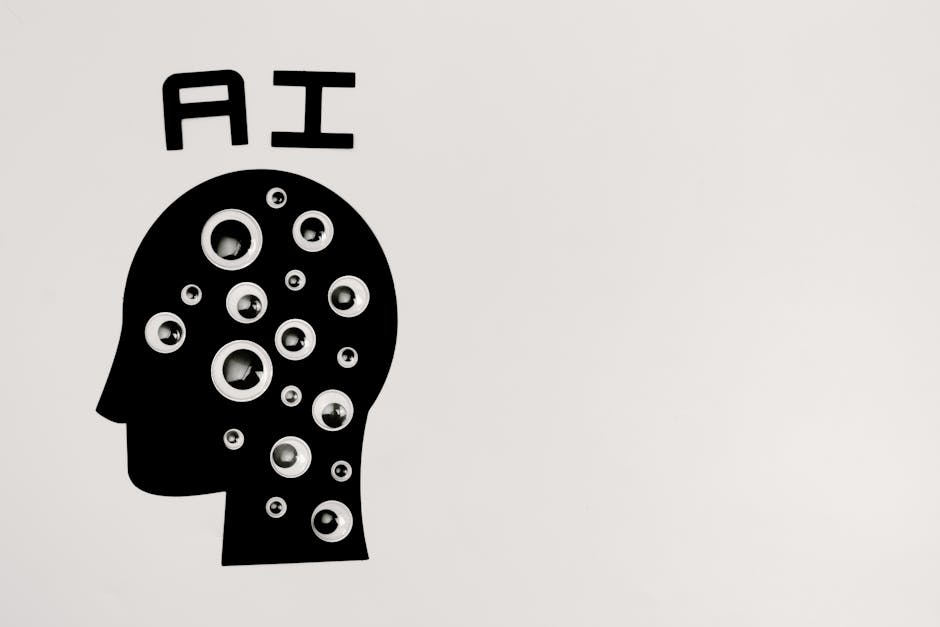
AI Shame — The Silent Killer of Corporate AI Rollouts
TL;DR
- •AI shame occurs when employees hide AI usage to avoid looking lazy or incompetent.
- •This "silence" prevents the company from scaling best practices and creates dangerous unofficial workflows.
- •Neutralizing this fear requires a shift from measuring hours worked to measuring output quality.
After watching dozens of mid-market founders struggle with stalled transformation, I've realized the biggest barrier isn't technical. It's a psychological drag called AI shame—where your most talented people hide their best shortcuts because they fear appearing replaceable.
Why Your Best Performers are Hiding AI
In most companies of 30–500 people, a strange paradox exists. The founder has bought the licenses, but the "active use" dashboards are flat. Meanwhile, under the surface, your top performers are likely using Claude or ChatGPT to draft emails, summarize meetings, and build reports in 10% of the time.
They don't tell you because of AI shame. If they reveal they finished a four-hour task in 20 minutes, they fear the reward will simply be ten times more work or, worse, a reduction in headcount. This is the "silent killer" of corporate AI rollouts because it keeps innovation in the shadows.
The Three Stages of AI Shame
- The Fraud Syndrome: High-performing juniors feel like they are "cheating" by using AI systems, leading to anxiety about their own value.
- The Output Inflation: Employees use the saved time to polish work obsessively or take on more tasks, but they never report the efficiency gain to leadership.
- The Hidden Stack: Teams build complex internal AI automation outside the company's view, creating massive data risks and knowledge silos.
Tool tip (Course for Business): To move past secret usage, we use a Shoulder-to-Shoulder training model. Instead of a lecture, we sit with employees and build their first automation live. This permission-giving environment is the only way to kill AI shame and start an Augment, don't replace culture that sticks long-term. See how it works: https://course.aiadvisoryboard.me/business
How to Create an "AI Amnesty" Environment
To scale corporate AI rollouts successfully, you must actively invite the secrets out of the dark. This isn't about policy; it's about cultural signaling.
- Celebrate the "Fast Finish": Publicly praise employees who find an AI shortcut that turns a daily chore into a 1-minute tasks.
- Shift from Hours to Results: If a manager still asks, "How long did this take?" instead of "How good is this result?", they are feeding the shame cycle.
- Appoint AI Champions: Use the 1:15 champion model to give people a safe peer-level space to share their "secret" prompts without feeling judged by the boss.
Team scan (what AI champions report after week 1)
- Adoption Lead: 3 employees admitted to using personal Pro accounts for confidential drafting.
- Use Case Alpha: Marketing team found a way to automate 80% of creative briefs (previously hidden).
- Use Case Beta: Sales rep revealed a custom GPT for competitor objection handling.
- Trust Metric: Employees feel safe sharing "failures" in prompt logic during hot-seat sessions.
- Saved Time Log: Initial report of 4 hours saved per week in admin tasks across the test group.
Micro-case (what changes after 7–14 days)
A mid-stage business with around 80 employees realized their AI licenses were barely being used. After we hosted a 2-hour "Amnesty Hackathon," it turned out 20% of the team was already using AI tools daily but feared that reporting it would lead to a shadow AI audit and reprimands. By shifting the narrative to "Augment, Don't Replace," the company saw 12 new internal automations surfaced by the staff within a week. The owner stopped seeing empty dashboards and started seeing real process improvement.
Note on this case: This example is illustrative — based on typical patterns we observe with companies of 30–500 employees, not a single named client. Specific numbers are rounded approximations of common ranges, not guarantees.
Tool tip (Course for Business): Our 6-week program is designed to eliminate AI shame by rewarding employees for finding efficiencies. We don't just teach "how to prompt"; we foster an environment where every employee ships their first AI automation live in the first session. Book a 30-min call to map your team's first week: https://course.aiadvisoryboard.me/business
FAQ
What is the main cause of AI shame? It is usually a combination of "Imposter Syndrome" (feeling that the machine did all the work) and fear of job loss. Employees worry that if they admit a machine can do their job, the manager will no longer need them.
How can I tell if my team is hiding AI usage? Look for "too-perfect" first drafts that arrive much faster than usual, or sudden increases in output quality from employees who haven't visibly changed their methodology. You can also run a shadow AI amnesty to surface unofficial tools.
Should I punish employees who used AI secretly? Absolutely not. Punishment validates the shame and drives the usage deeper underground. Instead, pivot to asking: "How can we share this exact workflow with the rest of the team?"
Does AI shame happen in technical teams? Yes, even in engineering. Developers sometimes feel that using AI to generate boilerplate code makes them "lesser" engineers, even though it significantly increases their focus on high-level architecture.
Conclusion
AI shame is the most expensive psychological tax you are currently paying. It forces your best people to work in the shadows and prevents your company from compounding its collective knowledge. To fix it, stop measuring the "grind" and start celebrating the shortcut.
Your immediate next step: Host an "AI Show & Tell" meeting. Offer a small prize for the most creative (and previously secret) way an employee has used AI to save more than 30 minutes. Make it safe to be fast.
If you want every employee to ship their first AI automation in five days and build a culture of open transparency—book a 30-min call and we'll map your team's first week: https://course.aiadvisoryboard.me/business
Frequently Asked Questions
Read with AI
Open this article in your assistant — it will summarize it and help apply it to your company.
Show the prompt
Read the article https://aiadvisoryboard.me/blog/ai-shame-corporate-adoption-blocker.md and summarize the key points. Then ask me about my company (industry, team size, what takes the most time) and explain which ideas from the article apply to us and where to start.
The pillar guide for "AI Literacy & Team Training" linking every article in this cluster.

Implements AI agents in companies and teaches founders and their teams to work with them — through courses and corporate programs.
This article was prepared with AI assistance, based on Yaroslav Maxymovych's methodology and materials. Spotted an inaccuracy — let us know via the form below.
Your company's first 3 AI automations — in 2 weeks
A corporate AI-transition program: 4 live sessions with your team plus a video course for every employee. Up to 20 people for one fixed price. If it doesn't work — money back.
New case studies on AI adoption — in your inbox
Once a week: practical breakdowns of what companies automate with AI and what actually comes out of it.
No spam. Unsubscribe anytime.
Related Articles
Curing AI Shame: The Behavioral Antidote to Stalled Adoption
AI shame is the invisible friction preventing employees from sharing their best automation wins. Learn how to transform 'shadow AI' into a transparent corporate advantage.
Read moreAI Shame: The Silent Killer of Corporate AI Rollouts
AI shame is the hidden reason most corporate AI rollouts hit a plateau. Learn how to identify when smart employees are hiding their automation wins and how to pivot your culture toward transparent…
Read moreFixing the Global AI Shame Gap in Corporate Rollouts
AI shame is the hidden reason your team hides automation wins from you. This article explores how to move from a replacement narrative to an augmentation framework, using the AI Champions model to…
Read more