Devstral Small 2505
At a glance
- Price per 1M tokens (input)
- $0.10
- Price per 1M tokens (output)
- $0.30
- Context
- 128,000 tokens
- Free access
- yes (see below)
Refreshed daily; data verified September 29, 2026. Published August 12, 2026.
Devstral Small 2505 is a compact language model from Mistral AI, designed for developers and teams that need reliable tool calling—the ability to have the model invoke external functions or APIs as part of a conversation. It suits tasks like automating workflows, building agents that query databases, or orchestrating multi-step operations where the model must decide when and how to call a tool. What distinguishes Mistral's approach is a focus on efficiency and control: the model is lightweight enough to deploy in production environments while maintaining strong accuracy on structured tasks, and it emphasizes transparent, developer-friendly integration over sheer scale.
Specifications & pricing
| Input (per 1M tokens) | $0.10 |
|---|---|
| Output (per 1M tokens) | $0.30 |
| Context window | 128,000 tokens |
| Max output | 128,000 tokens |
| Capabilities | tool calling |
LiteLLM community dataset (MIT), verified September 22, 2026. Official Mistral AI pricing.
What Devstral Small 2505 would cost on your workload — run it through the cost calculator →
Where to try Devstral Small 2505 for free
- Mistral AI offers a free chat — Le Chat (free plan). A vendor's free chat may run a different model from the same family — the exact model is not guaranteed.
Frequently asked questions
What is Devstral Small 2505 best used for?+
It is best for applications that require structured, reliable tool calling—for example, customer support bots that need to look up order statuses, internal assistants that fetch data from company systems, or automation scripts that trigger actions based on user requests. It is not designed for open-ended creative writing or long-form reasoning; its strength lies in precise, function-driven interactions.
How do I get started with Devstral Small 2505?+
You can access it through Mistral's platform or via major cloud providers that host their models. The typical workflow involves defining your tools (as JSON schemas), sending a user request, and letting the model return a structured call to the appropriate tool. Mistral provides documentation and examples for common use cases like API calls or database queries, and you can test it in their playground before integrating into your code.
How does Devstral Small 2505 differ from other Mistral models?+
Compared to larger Mistral models, Devstral Small is optimized for speed and cost-efficiency in production, with a particular emphasis on tool calling rather than broad conversational ability. It is smaller, which means lower latency and simpler deployment, but it may not match the nuance or depth of larger models on complex reasoning or creative tasks. It is a sibling to the 'Devstral' line, which is specifically tuned for developer-centric workflows.
What are the limitations of Devstral Small 2505?+
The main limitations are its narrower focus: it may struggle with ambiguous instructions or tasks that require extensive background knowledge. It also relies on the quality of your tool definitions—poorly specified functions can lead to incorrect calls. Additionally, like all language models, it can occasionally produce invalid JSON or hallucinate tool arguments, so you should implement validation and fallback logic in your application.
Compare with others
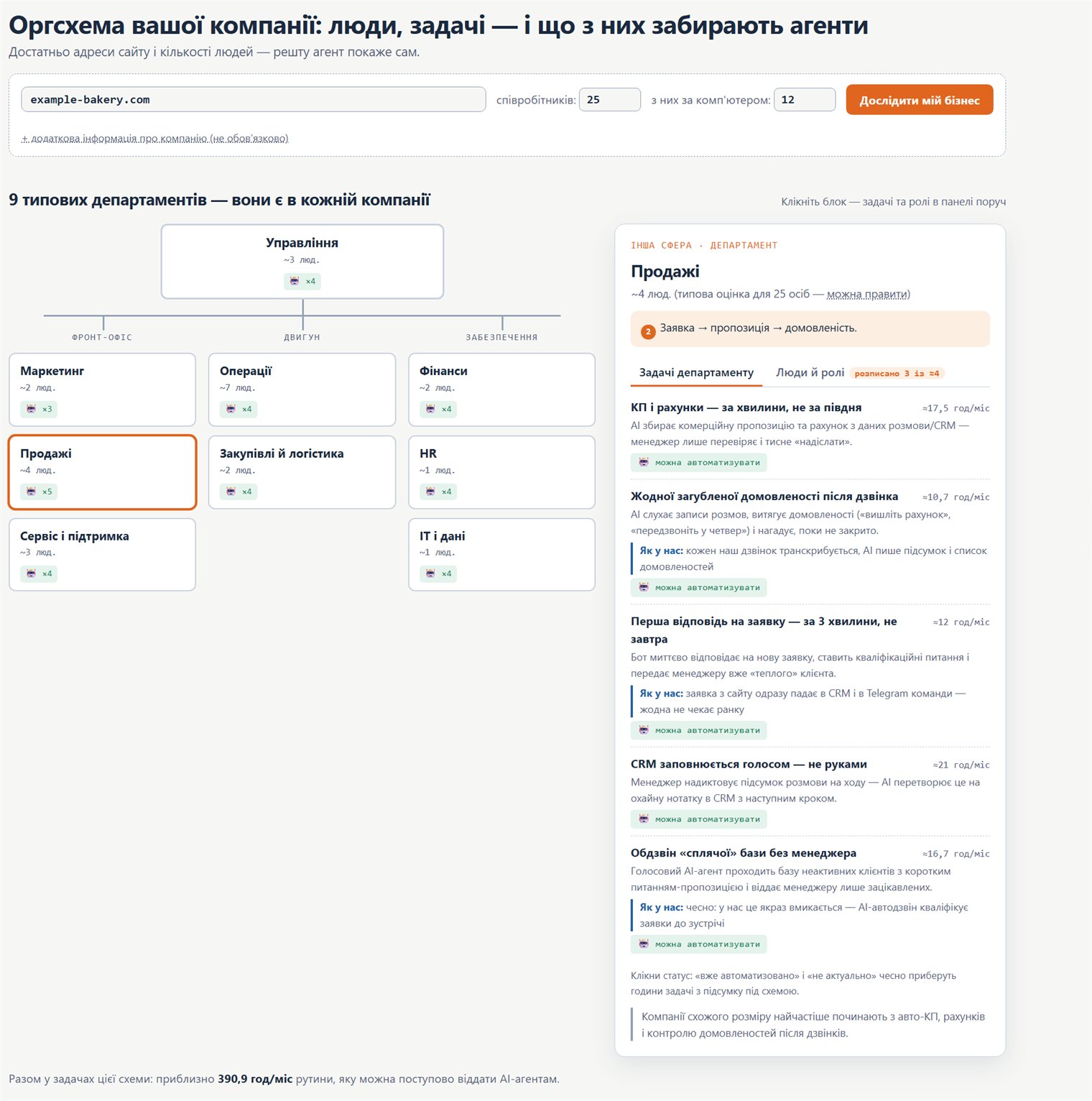
Org chart: how to move your company onto AI
A practical map: which company roles and processes AI agents can take over, where to start, and in what order to roll it out.