Gemini 3.8 Flash
At a glance
- Price per 1M tokens (input)
- $0.75
- Price per 1M tokens (output)
- $3.75
- Context
- 1,048,576 tokens
- Free access
- yes (see below)
Refreshed daily; data verified October 22, 2026. Published September 7, 2026.
Gemini 3.8 Flash by Google is designed for developers and business teams that need a responsive model capable of interpreting visual inputs, executing external functions through tool calling, and breaking down complex tasks into logical steps. It supports workflows where understanding images — such as diagrams, screenshots, or product photos — must be combined with real-time data access or API interactions. The model’s strength lies in its balance of speed and reasoning depth, making it suitable for applications like automated report generation from visual data, intelligent form processing, or dynamic customer support systems that adapt based on user input. Google’s approach emphasizes seamless integration between multimodal perception and actionable tool use, reducing the need for complex orchestration layers in downstream applications.
Specifications & pricing
| Input (per 1M tokens) | $0.75 |
|---|---|
| Output (per 1M tokens) | $3.75 |
| Cache read (per 1M tokens) | $0.075 |
| Context window | 1,048,576 tokens |
| Max output | 65,536 tokens |
| Capabilities | images, tool calling, reasoning |
LiteLLM community dataset (MIT), verified October 22, 2026. Official Google (Gemini) pricing.
What Gemini 3.8 Flash would cost on your workload — run it through the cost calculator →
Where to try Gemini 3.8 Flash for free
- Google (Gemini) offers a free chat — Gemini (free plan). A vendor's free chat may run a different model from the same family — the exact model is not guaranteed.
- 🎁 On our promo-codes page: Gemini for free: access and discounts.
Frequently asked questions
What types of tasks benefit most from Gemini 3.8 Flash’s image understanding capability?+
Tasks that involve interpreting visual content alongside textual or procedural logic, such as extracting data from scanned forms, analyzing UI layouts for accessibility feedback, or guiding users through physical setup steps using photos, are well-suited to this model’s strengths.
How does tool calling work in this model, and why is it useful for business applications?+
Tool calling allows the model to invoke external functions — like querying a database, checking inventory, or triggering a workflow — based on user input. This enables the model to go beyond text generation and perform real actions, making it valuable for building assistants that can retrieve live data or execute business logic safely.
How does Gemini 3.8 Flash differ from other models in the Gemini series?+
Compared to larger variants in the line, this version prioritizes lower latency and efficient reasoning while maintaining strong multimodal and tool-use performance. It is optimized for scenarios where quick response times are critical, without sacrificing the ability to handle layered reasoning or visual context.
What are the current limitations users should be aware of when deploying this model?+
The model may struggle with highly abstract visual reasoning or extremely long documents that exceed its processing window. Additionally, while it can call tools effectively, the reliability of those actions depends on the quality and availability of the external systems it interacts with.
Compare with others
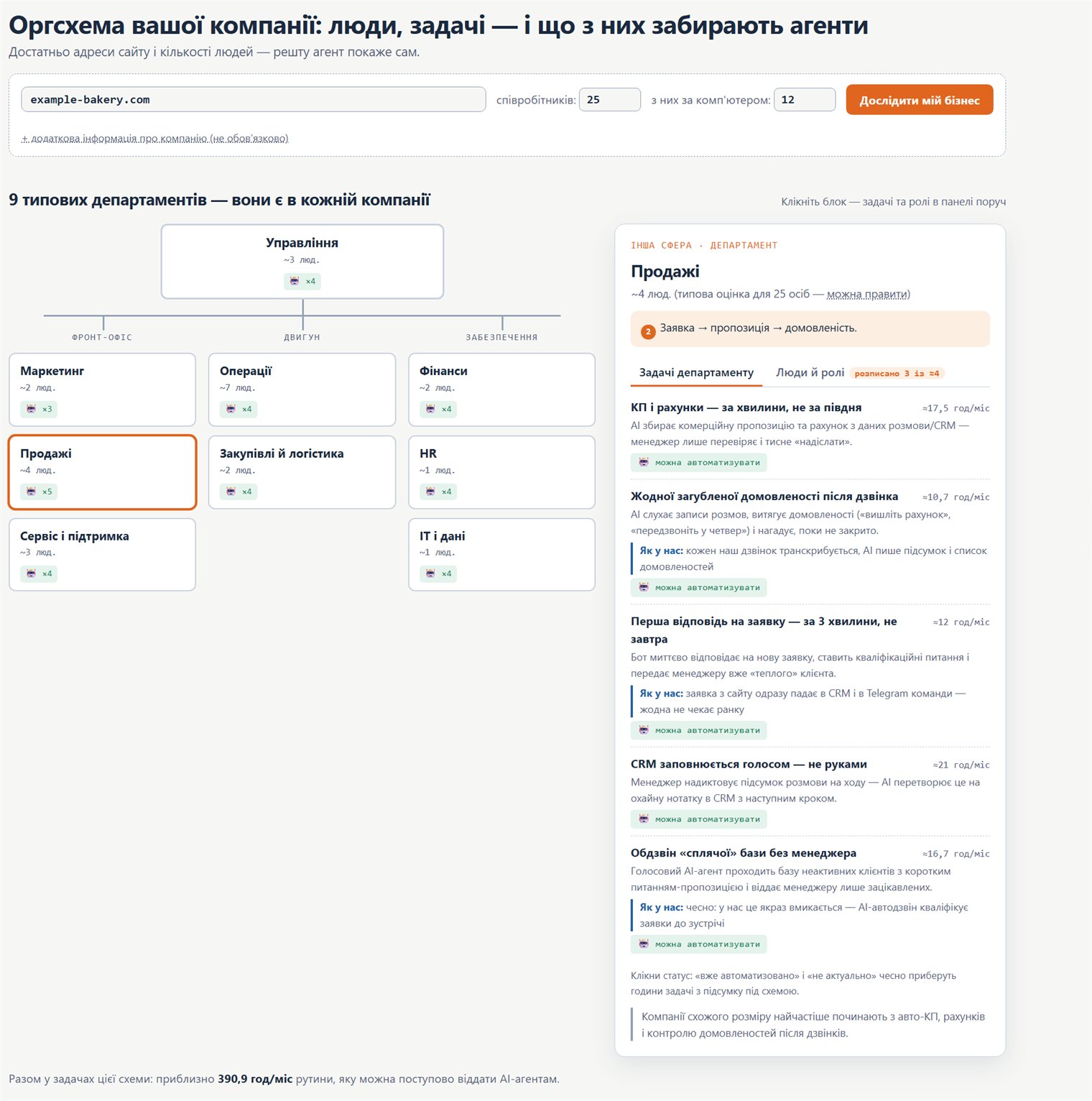
Org chart: how to move your company onto AI
A practical map: which company roles and processes AI agents can take over, where to start, and in what order to roll it out.