GPT-5 Nano
At a glance
- Price per 1M tokens (input)
- $0.05
- Price per 1M tokens (output)
- $0.40
- Context
- 272,000 tokens
- Free access
- yes (see below)
Refreshed daily; data verified September 29, 2026. Published August 12, 2026.
GPT-5 Nano is aimed at developers and small‑scale business teams that need to add visual understanding and programmable actions to their applications without large infrastructure overhead. It handles image analysis, step‑by‑step logical reasoning, and dynamic function invocation, making it suitable for tasks such as document classification, interactive assistants, and automated data extraction. OpenAI’s approach combines a compact architecture with a unified model that processes text and images together, and it exposes a standardized interface for tool calling (the ability to invoke external functions) that simplifies integration.
Specifications & pricing
| Input (per 1M tokens) | $0.05 |
|---|---|
| Output (per 1M tokens) | $0.40 |
| Cache read (per 1M tokens) | $0.005 |
| Context window | 272,000 tokens |
| Max output | 128,000 tokens |
| Capabilities | images, tool calling, reasoning |
LiteLLM community dataset (MIT), verified September 29, 2026. Official OpenAI pricing.
What GPT-5 Nano would cost on your workload — run it through the cost calculator →
Where to try GPT-5 Nano for free
- OpenAI offers a free chat — ChatGPT (free plan). A vendor's free chat may run a different model from the same family — the exact model is not guaranteed.
Frequently asked questions
What kinds of problems is GPT-5 Nano most effective for?+
It excels at scenarios that combine visual input with logical processing, such as reading receipts, interpreting diagrams, and guiding users through multi‑step workflows that require calling external services.
How do I start using GPT-5 Nano in my existing stack?+
Begin by accessing the model through the provided API endpoint, supply images as encoded data, and describe any functions you want the model to invoke; the documentation includes sample code for typical languages.
How does GPT-5 Nano differ from the larger models in the same family?+
The Nano variant trades raw scale for lower latency and reduced compute cost, while still offering integrated image understanding and tool calling, whereas the larger siblings prioritize higher depth of knowledge and longer contextual reasoning.
Comparisons
Compare with others
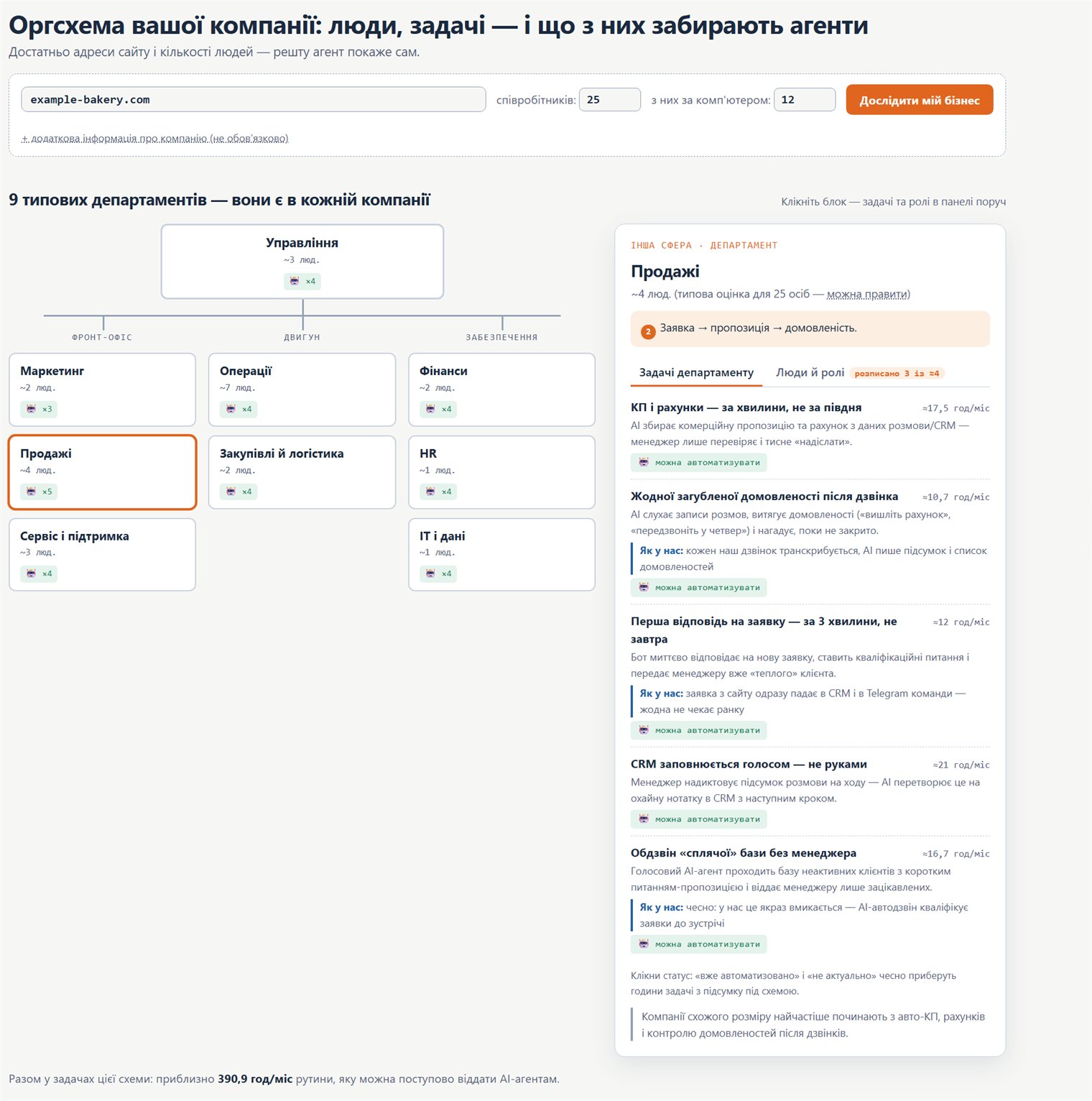
Org chart: how to move your company onto AI
A practical map: which company roles and processes AI agents can take over, where to start, and in what order to roll it out.