Lyria 3.5 Pro Preview
At a glance
- Price per 1M tokens (input)
- free
- Price per 1M tokens (output)
- free
- Context
- 131,072 tokens
- Free access
- yes (see below)
Refreshed daily; data verified October 22, 2026. Published September 7, 2026.
Lyria 3.5 Pro Preview by Google is designed for developers and technical teams building applications that require reliable text generation at scale. It supports tasks such as drafting reports, summarizing documents, generating code comments, and creating structured outputs from unstructured input. The model emphasizes consistency in long-form reasoning and benefits from Google’s focus on safety-aligned training and integration with enterprise-grade tooling. Unlike more experimental variants, this preview prioritizes stability and predictable behavior for production use cases where accuracy and traceability are essential.
Specifications & pricing
| Input (per 1M tokens) | free |
|---|---|
| Output (per 1M tokens) | free |
| Context window | 131,072 tokens |
| Max output | 8,192 tokens |
| Capabilities | text |
LiteLLM community dataset (MIT), verified October 22, 2026. Official Google (Gemini) pricing.
What Lyria 3.5 Pro Preview would cost on your workload — run it through the cost calculator →
Where to try Lyria 3.5 Pro Preview for free
- Google (Gemini) offers a free chat — Gemini (free plan). A vendor's free chat may run a different model from the same family — the exact model is not guaranteed.
- 🎁 On our promo-codes page: Gemini for free: access and discounts.
Frequently asked questions
What types of tasks is this model best suited for?+
It works well for generating coherent text in business contexts such as internal communications, technical documentation, and light data transformation. It handles instruction following reliably when prompts are clear and scoped.
How do I begin using this model in my workflow?+
Access is provided through Google’s cloud platform with standard API endpoints. Users need to authenticate via service accounts and can integrate the model using common SDKs or REST calls. No special setup is required beyond standard cloud configuration.
How does this model differ from other versions in the Gemini line?+
This preview version focuses on refined text generation with improved consistency over earlier releases. It omits certain multimodal features found in larger variants and is tuned for latency-sensitive applications where text-only output is sufficient.
What should I be aware of regarding its limitations?+
The model may struggle with highly ambiguous prompts or niche domain knowledge not well represented in its training data. It does not perform real-time information retrieval and should not be used for decisions requiring up-to-the-minute factual verification without external validation.
Compare with others
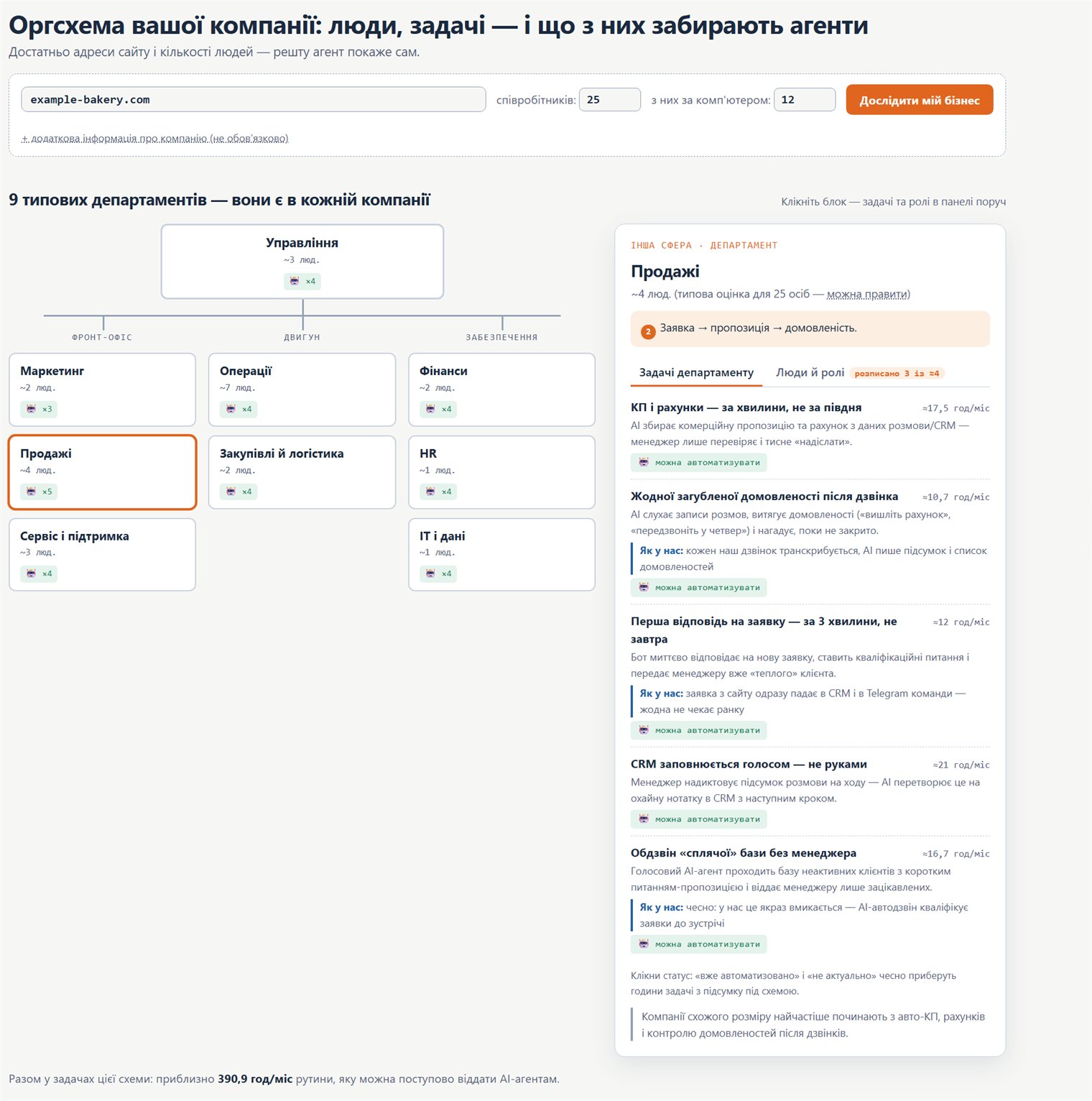
Org chart: how to move your company onto AI
A practical map: which company roles and processes AI agents can take over, where to start, and in what order to roll it out.