AI Training for a 100-Person Company — The 1:15 Champion Model Explained
TL;DR
- •Train 6–7 AI champions (1 per 15 employees) to build their own automations first.
- •Champions then guide peers in their teams — no central rollout needed.
- •Founders stay involved only in kickoff and monthly reviews.
- •Definition:** AI Champion — a non-technical employee who learns to build working AI automations for their own workflow and helps 10–20 peers do the same.
- •Definition:** 1:15 Model — a training structure where one AI champion supports up to 15 colleagues through peer-led, shoulder-to-shoulder learning.
- •Definition:** Shoulder-to-Shoulder — a live, 30-minute weekly session where champions observe peers attempting AI tasks and offer real-time, non-judgmental feedback.
After watching 30+ founders try to scale AI training across 100-person teams, my conclusion is this: the bottleneck isn’t budget or tools — it’s who owns the learning. When AI training stays with IT or external vendors, adoption stalls. When founders delegate it to line employees without structure, chaos follows. The 1:15 champion model fixes this by making key employees the first owners of AI — not trainers, not pilots, but builders.
How to Select Your First AI Champions
Start with volunteers from teams that already use digital tools daily — sales, ops, support. Look for curiosity, not seniority. Ask: "Who here has tried to automate something tedious this month, even if it failed?" Pick 6–7 people across departments. Give them a simple goal: build one working automation for their own task in two weeks.
Tool tip (Course for Business): The 1:15 model works because champions learn by building, not watching. In our corporate AI intensive, participants describe their workflow in words — AI writes the code. No prior tech skill is needed. See how the first three tasks get mapped in a 30-min call.
What Champions Do in Week 1
Champions attend four live sessions over two weeks. Each session focuses on one real task from their job — they build a tool live, using plain language prompts. By the end, each has a working automation: a lead qualifier, a meeting summarizer, or an invoice checker. They don’t learn theory — they build.
How Champions Train Their Teams
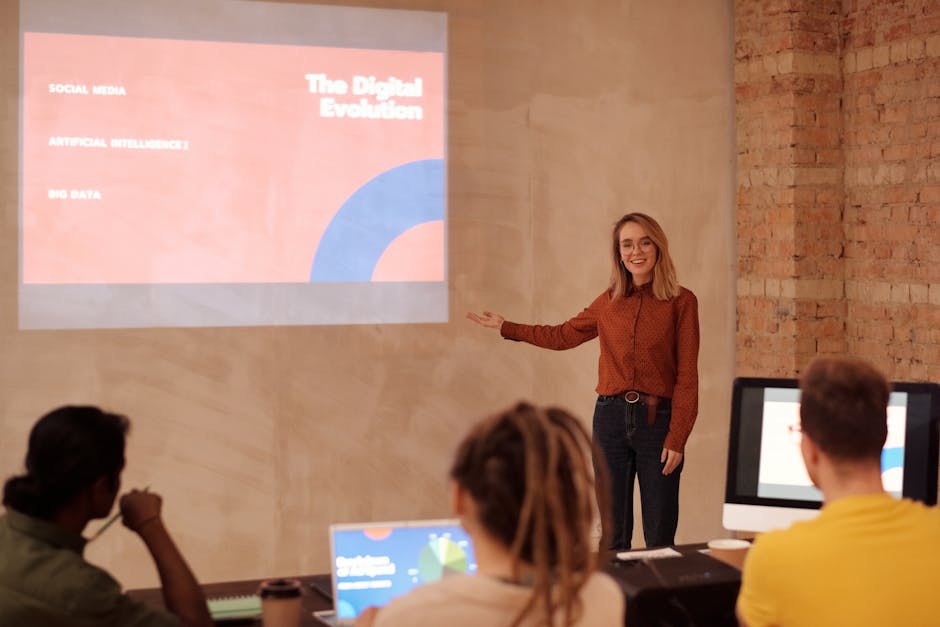
After the two-week sprint, champions lead optional 30-minute peer sessions. No slides. No lectures. They share their screen, show their automation, and ask: "What’s one repetitive task you’d like to offload?" Peers try building their own with the champion guiding — shoulder-to-shoulder. Attendance is voluntary. Momentum comes from seeing peers succeed.
Tool tip (Course for Business): Augment, don’t replace is the core mindset. Champions aren’t teaching AI to take jobs — they’re showing how AI handles the repetitive parts so people can focus on judgment, creativity, and client work.
Manager Scan (2-Minute Digest Example)
- Sales champion built a lead-scoring agent — saves 5 hrs/week.
- Ops champion automated weekly inventory reconciliation — now done in 20 minutes.
- Support champion created a ticket-triage bot — reduces first-response time by 40%.
- HR champion automated screening reminders — cuts manual follow-ups by 3 hrs/week.
- Two champions are still refining their tools; no pressure to ship.
- Peer sessions are running in three teams — 12 employees have started building.
- Zero escalations to IT or founders.
Micro-case (What Changes After 7–14 Days)
A 100-person logistics company used the 1:15 model to train champions from dispatch, billing, and customer service. After two weeks, each champion had a working automation: one for route delay alerts, one for invoice matching, one for SLA breach alerts. In the following two weeks, peer sessions began organically. By day 30, 22 employees had built or were building their own tools. The founder stopped receiving urgent requests for "AI help" — instead, champions shared updates in a Slack channel. Visibility improved not because the founder checked more, but because problems were solved closer to the source.
Note on this case: This example is illustrative — based on typical patterns we observe with companies of 30–500 employees, not a single named client. Specific numbers are rounded approximations of common ranges, not guarantees.
FAQ
Do we need to hire an AI specialist first? No. The model works because champions are employees who already understand your workflows. External specialists lack context — champions gain it by building for their own jobs.
What if a champion struggles to build? They pair with another champion for one session. The goal isn’t perfection — it’s progress. Most blockers come from unclear task descriptions, not AI limits.
How much founder time does this require? Two hours at kickoff to align on goals, then one 30-minute monthly check-in. The rest is peer-driven.
Can this work if we’re not tech-savvy?�Yes. The method uses plain-language prompting — no coding, no APIs. If you can describe a task in words, you can build an automation.
What happens after the first two weeks? Champions continue leading peer sessions. New volunteers join. The founder’s role shifts from setup to observing which automations are spreading — and where friction remains.
If you want your team to finish with working automations they built themselves — book a 30-min call and we'll map your first three tasks.
Frequently Asked Questions
Read with AI
Open this article in your assistant — it will summarize it and help apply it to your company.
Show the prompt
Read the article https://aiadvisoryboard.me/blog/ai-training-for-100-person-company-champion-model.md and summarize the key points. Then ask me about my company (industry, team size, what takes the most time) and explain which ideas from the article apply to us and where to start.
The pillar guide for "AI Literacy & Team Training" linking every article in this cluster.
Implements AI agents in companies and teaches founders and their teams to work with them — through courses and corporate programs.
This article was prepared with AI assistance, based on Yaroslav Maxymovych's methodology and materials. Spotted an inaccuracy — let us know via the form below.
Your company's first 3 AI automations — in 2 weeks
A corporate AI-transition program: 4 live sessions with your team plus a video course for every employee. Up to 20 people for one fixed price. If it doesn't work — money back.
AI adoption resources — one email
Leave your email to receive a welcome email with blog resources. There is no regular newsletter at present
No spam. Unsubscribe anytime.
Related Articles

Atos: 300 early licenses scaled to 15,000 trained — the bridge
How Atos scaled AI literacy from 300 early licenses to 15,000 trained employees using internal champions and peer-to-peer learning — a bridge model for SMBs.
Read more
Exposing AI Shame: The Invisible Friction in Corporate Adoption
AI shame is a silent innovation killer where smart employees hide their AI use to avoid appearing lazy. Learn how to transform this culture of secrecy into one of high-leverage transparency through…
Read moreAI Training for a 100-Person Company: The 1:15 Champion Model
Scaling AI in a 100-person company requires moving away from top-down seminars. Discover how the 1:15 Champion Model creates a decentralized network of experts who drive real, departmental ROI…
Read more