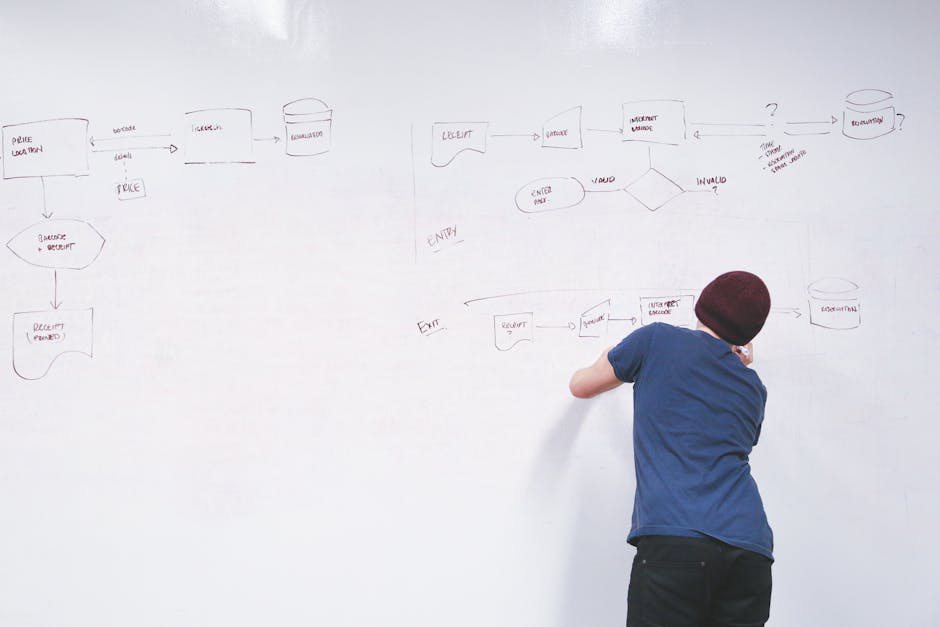
Process Mapping Before AI Rollout — Without a McKinsey Deck
TL;DR
- •Map your company's processes before buying or building any AI tool.
- •Start with a one-page org chart: departments, tasks, and routine work.
- •Run a 30-minute diagnostic per department to find where AI fits — and where it doesn't.
- •Definition:** Process mapping — a visual or written outline of how work moves through your company, showing who does what, where handoffs happen, and which steps are routine.
- •Definition:** AI rollout — the sequence of introducing AI tools or agents into existing workflows, starting with low-risk, high-volume tasks.
- •Definition:** Plan → Fact → Gap — an operating rhythm where you compare what was supposed to happen against what actually happened, then act on the difference.
I watched a founder sign an AI vendor contract before he could draw his own company's org chart on a whiteboard. Three months later, the pilot was stuck because nobody could explain which tasks actually lived inside the workflow they wanted to automate.
What Is Process Mapping, and Why Does It Come Before AI?
Process mapping is the act of writing down how work actually flows through your business — not how you imagine it flows, but how it happens on a regular Tuesday. For a company of 30 to 500 people, this means listing departments, the recurring tasks inside each, and the handoffs between them.
AI does not fix broken processes. It accelerates them. If your invoice approval takes five days because three people sign off in sequence, an AI agent will simply process that same five-day delay faster. Mapping first lets you see the delay, decide whether to remove it, and only then hand the cleaned-up step to AI.
How to Map Your Processes in One Evening
You do not need a consulting firm. You need a whiteboard, a shared document, or a free org-chart tool, and about two hours.
Step 1: Draw the org chart by department
List every department — sales, operations, finance, support, HR — and the headcount in each. Do not draw reporting lines yet. Draw task clusters instead.
Step 2: List the recurring tasks inside each department
For each department, write down the tasks that repeat weekly or daily. Examples: invoice matching, lead follow-up, schedule coordination, policy Q&A, expense approval.
Step 3: Mark the routine work
Highlight tasks that are rules-based, repetitive, and low-judgment. These are your first AI candidates. Tasks that require nuanced client judgment or creative strategy stay with people.
Step 4: Find the handoffs
Mark where work passes from one person or department to another. Handoffs are where delays, errors, and visibility gaps live — and where AI agents or async updates often create the most value.
The Manager Scan: What This Looks Like in Practice
Manager scan (2-minute digest example)
- Sales: 12 qualified leads this week; 4 stalled at legal review for over 5 days
- Support: 34 tickets resolved; 8 required manager escalation
- Finance: invoice approval average is 4.2 days; target is 2
- Ops: 3 handoffs between project and delivery teams lacked a named owner
- Gap: the legal bottleneck is not a tool problem — it is a process owner problem
This digest takes two minutes to read and shows the owner exactly where AI could help (ticket routing, invoice matching) and where it would not (legal sign-off authority).
Tool Tip: Start With the Org Chart, Not the Tool List
Tool tip (AiAdvisoryBoard.me): Before you compare AI vendors, build your company's org chart with tasks and routine work marked. Our free tool draws it from your website and headcount in about 30 seconds, highlighting which tasks can gradually move to AI agents and estimating the monthly hours involved. No questionnaire, no signup wall — just the first map you need before any AI rollout.
https://aiadvisoryboard.me/?lang=en
Copy/Paste Template: Department Process Map
| Department | Recurring Task | Frequency | Owner | Routine? | AI Candidate? |
|------------|----------------|-----------|-------|----------|---------------|
| Finance    | Invoice matching | Weekly    | AP Lead | Yes      | Yes — 3-way match |
| Support    | Ticket triage   | Daily     | Team Lead | Yes    | Yes — initial sort |
| Sales      | Contract review | Per deal  | Manager | No       | No — needs judgment |
| HR         | Offer letter gen | Per hire  | Coordinator | Yes   | Yes — template fill |
Fill this in for each department. If a task is not routine and not high-volume, do not automate it yet.
Tool Tip: Run the Plan → Fact → Gap Check Before You Automate
Tool tip (AiAdvisoryBoard.me): Once the map is done, compare what you planned for each process against what actually happens weekly. The gap between plan and fact is where AI either helps or exposes a deeper process problem. Our 7-day diagnostic surfaces this automatically across departments, so you see the real workflow before buying any AI subscription.
https://aiadvisoryboard.me/?lang=en
Micro-Case: What Changes After 7–14 Days
A 120-person logistics company mapped its dispatch process before touching any AI tool. The owner discovered that drivers were calling dispatchers five times per shift to confirm route changes — a routine task that lived outside the official system. After mapping, the team added a simple status update step instead of buying an expensive routing AI. Dispatch calls dropped within two weeks, and the owner could see the improvement in the daily digest without calling anyone.
Note on this case: This example is illustrative — based on typical patterns we observe with companies of 30–500 employees, not a single named client. Specific numbers are rounded approximations of common ranges, not guarantees.
FAQ
Do I need a consultant to map my processes?
No. For a 30-500 person company, a founder or COO can complete a basic map in one evening using a shared document or free tool. Consultants add value at scale, but not for the first pass.
What if my team resists sharing how they actually work?
Frame it as visibility for the owner, not surveillance for individuals. Focus on tasks and handoffs, not personal performance.
How do I know which task to automate first?
Pick a routine, high-volume task with a clear owner and a measurable handoff. Avoid anything that requires client negotiation or strategic judgment in the first round.
What comes after the map?
Run a small pilot on one mapped task, measure the plan vs fact gap for two weeks, then decide whether to scale, adjust, or kill the automation.
Conclusion
Process mapping is not a deliverable. It is the prerequisite for any AI decision that does not waste money. Draw the map, find the routine work, and automate only what you can already see clearly.
Start today: draw your org chart by department and list the top three recurring tasks in each. That is your AI rollout starting point.
If you want a system that surfaces the Plan → Fact → Gap automatically — every day, across the company — see how the 7-day diagnostic works.
https://aiadvisoryboard.me/?lang=en
Frequently Asked Questions
Read with AI
Open this article in your assistant — it will summarize it and help apply it to your company.
Show the prompt
Read the article https://aiadvisoryboard.me/blog/process-mapping-before-ai-rollout-without-mckinsey-deck.md and summarize the key points. Then ask me about my company (industry, team size, what takes the most time) and explain which ideas from the article apply to us and where to start.
The pillar guide for "Owner Visibility Before AI" linking every article in this cluster.

Implements AI agents in companies and teaches founders and their teams to work with them — through courses and corporate programs.
This article was prepared with AI assistance, based on Yaroslav Maxymovych's methodology and materials. Spotted an inaccuracy — let us know via the form below.
Your company's first 3 AI automations — in 2 weeks
A corporate AI-transition program: 4 live sessions with your team plus a video course for every employee. Up to 20 people for one fixed price. If it doesn't work — money back.
AI adoption resources — one email
Leave your email to receive a welcome email with blog resources. There is no regular newsletter at present
No spam. Unsubscribe anytime.
Related Articles
What a 7-Day Diagnostic Actually Produces — Sample Artefacts
A 7-day diagnostic produces three concrete artefacts: a real org chart with task ownership, a Plan vs Fact vs Gap report, and a routine-cost baseline. See what owners of 30-500 person companies…
Read more
Progress Signals That Leaders Actually Trust: A Founder's Guide to Seeing Real Movement
How founders and CEOs can spot real progress signals instead of activity theater, using the Plan vs Fact vs Gap framework for owner visibility without micromanagement.
Read more
Weekly OKR Check-In Template: 15 Minutes, Written
A written weekly OKR check-in template that takes 15 minutes and shows founders the gap between plan and fact without another meeting.
Read more