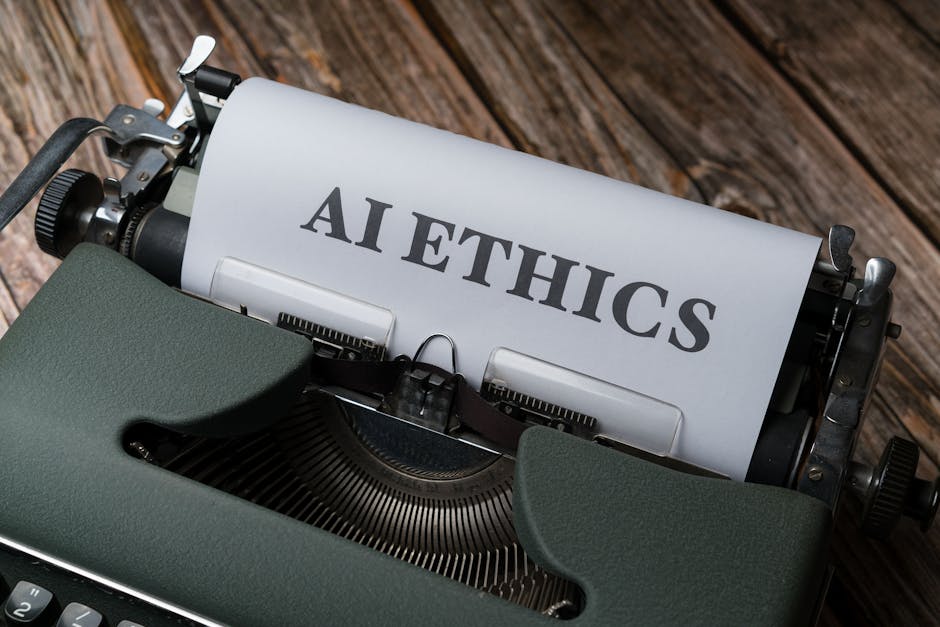
Responsible AI Governance for a 30-500 Company (No CRO Needed)
TL;DR
- •Assign AI ownership to existing leaders (not a new role).
- •Use a one-page policy focused on data, bias, and human review.
- •Review AI use monthly with a 3-question checklist.
- •Definition:** Responsible AI governance — the set of lightweight, enforceable practices that ensure AI use aligns with company values, legal norms, and operational safety — without requiring a dedicated ethics officer.
- •Definition:** AI accountability — the practice of tracing AI-assisted decisions back to a human owner who signs off on scope, data, and monitoring.
- •Definition:** Human-in-the-loop — a design rule where AI outputs inform but do not finalize decisions in hiring, finance, or customer-facing outcomes.
After watching 30+ founders try to fix AI governance by copying enterprise playbooks, my conclusion is this: you don’t need a CRO to run responsible AI in a 30-500 person company. You need clarity, not complexity.
How to assign AI ownership without creating a new role
Start by mapping which teams are using AI today — even informally. Then, assign AI oversight to the functional leader closest to the work: the Head of Sales owns AI-assisted outreach; the Head of Finance owns AI in reconciliations; the Head of HR owns AI in screening. This isn’t about adding work — it’s about clarifying who answers when something goes wrong.
Each leader signs a simple statement: "I approve the use of AI in [specific task]. I confirm we’ve checked for data privacy, bias risk, and have a human review step."
This takes 20 minutes per leader. No new meetings. No new titles.
Tool tip (AiAdvisoryBoard.me): The fastest way to surface gaps in AI ownership is to run a Plan → Fact → Gap check on your AI policy. Ask each leader: What did you plan to monitor? What are you actually seeing? Where’s the gap? This turns abstract governance into a monthly 10-minute team habit.
What belongs in your one-page AI policy
Keep it to one page. Include:
- Allowed uses: List 3-5 specific tasks (e.g., drafting emails, summarizing call notes, flagging invoices for review).
- Data rules: No PII, no salary data, no customer lists in public AI tools.
- Bias check: For any AI used in hiring, promotions, or pricing — require a second human review.
- Human review: Define which outputs need a person to approve before action (e.g., AI-generated contracts need legal review; AI-generated job descriptions need HR review).
- Incident flow: If AI makes a mistake, who do you tell? How do you log it? Keep it simple: tell your manager, log it in a shared doc, review at next ops meeting.
This isn’t theoretical. It’s what we’ve seen work in companies from 30 to 500 people when they stop waiting for perfection and start with clarity.
Tool tip (AiAdvisoryBoard.me): Run a 5-minute audit: Open your company’s Slack or Teams. Search for "AI" or "ChatGPT" in the last month. Pick three examples. Ask: Who approved this? Was data safe? Was a human in the loop? If you can’t answer, that’s your governance gap.
Monthly AI governance check-in (3 questions)
Once a month, the founder or COO asks each AI owner:
- What AI are you using this month that you weren’t using last month?
- Have you seen any odd outputs, biases, or data concerns?
- What’s one thing you’d change about how you’re using AI?
Record answers in a shared doc. No slides. No long meeting. If you see a pattern — say, three people mentioning the same data risk — you act. If not, you move on.
This is how governance stays alive: not through audits, but through routine, lightweight checks.
Manager scan (2-minute digest example)
- Head of Sales: Using AI to draft follow-up emails. No PII used. Human reviews all sends. Gap: None.
- Head of Finance: Using AI to flag mismatched invoices. Human reviews every flag. Gap: Want to test on vendor credits next month.
- Head of HR: Using AI to draft job descriptions. Human reviews for tone and bias. Gap: None — but wants to add a disability-inclusion check.
- Head of Ops: Using AI to summarize shift notes. Human verifies key actions. Gap: None.
Micro-case (what changes after 7–14 days)
A 120-person logistics company started using AI for route notes and load summaries. The founder noticed inconsistent use — some teams copied-pasted raw outputs, others edited heavily. After assigning AI ownership to the Head of Ops and running a one-page policy session, the team adopted a simple rule: "AI output is a draft. Human must edit before sending to drivers." Within 10 days, the founder saw fewer customer complaints about unclear instructions and felt confident delegating AI oversight without micromanaging.
Note on this case: This example is illustrative — based on typical patterns we observe with companies of 30–500 employees, not a single named client. Specific numbers are rounded approximations of common ranges, not guarantees.
FAQ
Do I need to hire someone to run AI governance? No. Assign it to existing leaders closest to the work. A Head of Sales can oversee AI in outreach; a Head of HR can oversee AI in screening. The key is clarity, not a new role.
What if we use free AI tools like ChatGPT or Claude? The same rules apply: no PII, no confidential data, and human review for decisions that affect people (hiring, pricing, promotions). Free doesn’t mean risk-free.
How do we handle AI mistakes? Treat them like any process error: log what happened, who was involved, and how to prevent recurrence. No blame — just learning. Use your existing ops meeting to review.
What if an employee uses AI without telling us? That’s a signal, not a scandal. Ask: What problem were they trying to solve? Then, bring that use into the open, check it against your policy, and approve or adjust.
Is this enough for GDPR or other regulations? It’s a foundation. For high-risk use (like biometrics or credit scoring), you’ll need more. But for most SMB AI use — drafting, summarizing, flagging — this covers the core.
If you want a system that surfaces ownership, data use, and human review automatically — every month, across the company — see how the 7-day diagnostic works. https://aiadvisoryboard.me/?lang=en
Frequently Asked Questions
Read with AI
Open this article in your assistant — it will summarize it and help apply it to your company.
Show the prompt
Read the article https://aiadvisoryboard.me/blog/responsible-ai-governance-for-30-500-company-no-cro-needed.md and summarize the key points. Then ask me about my company (industry, team size, what takes the most time) and explain which ideas from the article apply to us and where to start.
The pillar guide for "AI Implementation Roadmap" linking every article in this cluster.

Implements AI agents in companies and teaches founders and their teams to work with them — through courses and corporate programs.
This article was prepared with AI assistance, based on Yaroslav Maxymovych's methodology and materials. Spotted an inaccuracy — let us know via the form below.
Your company's first 3 AI automations — in 2 weeks
A corporate AI-transition program: 4 live sessions with your team plus a video course for every employee. Up to 20 people for one fixed price. If it doesn't work — money back.
AI adoption resources — one email
Leave your email to receive a welcome email with blog resources. There is no regular newsletter at present
No spam. Unsubscribe anytime.
Related Articles

How to Run a Pre‑Mortem That Catches Campaign Risks Before Launch
A practical guide to running a pre‑mortem that reveals campaign risks early, improves owner visibility, and creates actionable mitigation owners without adding meetings.
Read more
AI vs. Human Status Rollups: What Each Excels At
Discover the distinct strengths of AI and human managers in status rollups. This article explores when AI provides efficient data summaries and when human judgment is indispensable for true…
Read more
3-day AI intensive vs 6-week program — which sticks?
Founder-to-founder breakdown: why short, immersive AI training with shoulder-to-shoulder hot seats creates lasting adoption where longer programs fail — and how to measure what actually sticks.
Read more