Training Employees on Claude — First 30 Days Playbook
TL;DR
- •Week 1: Founder or key employees learn Claude basics and identify 1–2 repetitive tasks to automate.
- •Week 2–3: Train AI Champions (1 per 15–20 employees) using Shoulder-to-Shoulder method — they build real automations in their own workflows.
- •Week 4: Champions run micro-workshops for their pods; team adopts 3–5 working automations; adoption measured by time saved, not logins.
When a founder of a 40-person logistics team told me they’d bought Claude licenses but saw zero change in daily work after two weeks, I realized the problem wasn’t the tool — it was the rollout. Most teams treat AI training like software deployment: hand out licenses, run a demo, wait for magic. That’s why adoption stalls. My conclusion after watching 30+ founders try this is simple: you don’t train employees on Claude by showing them prompts — you train them by having them build small automations in their own work, with shoulder-to-shoulder support, and measuring what actually shifts in their weekly output.
How to structure the first 30 days of Claude training
Week 1: Founder-led foundation (Days 1–5) Start with the founder or a small group of key employees (ops, sales, HR) spending 90 minutes/day with Claude. Goal: not to become experts, but to feel the friction of real work and see where Claude removes it. Each person picks one repetitive task — e.g., drafting status updates, summarizing meeting notes, formatting expense reports — and spends 20 minutes/day trying to automate it with Claude. At the end of the week, share what worked and what didn’t. This isn’t about perfect prompts — it’s about building intuition for where AI fits.
Tool tip (Course for Business): In our corporate AI intensive, we start with Augment, don't replace as the first mindset shift — because if employees see AI as a threat to their role, they won’t engage. We show them how to carve out 20–30% of their weekly routine for automation, not replacement.
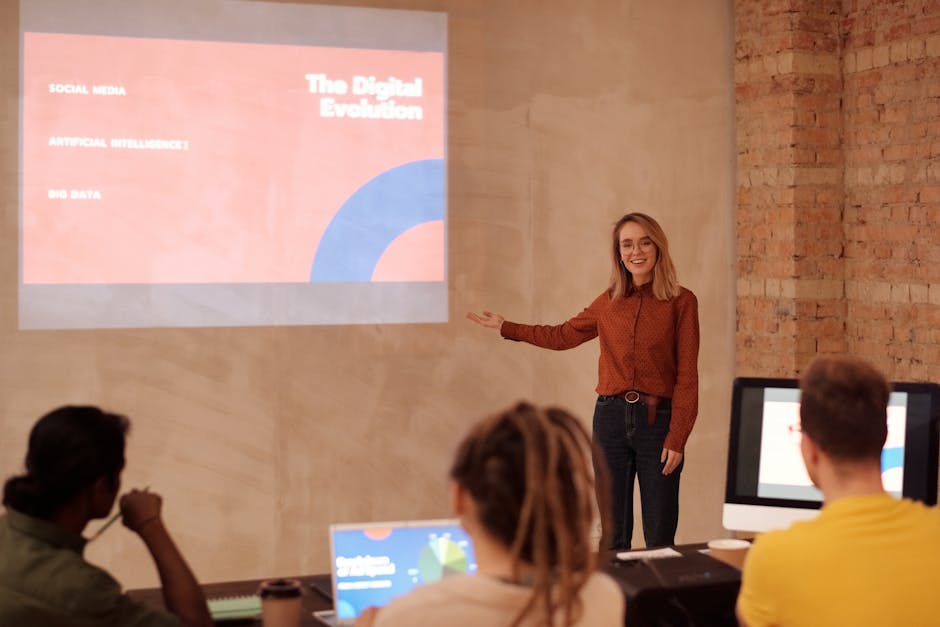
Week 2–3: Champion activation (Days 6–21) Identify AI Champions — not volunteers, but people whose roles have clear, repeatable subtasks (e.g., HR drafting job descriptions, sales writing follow-ups, ops generating reports). Train them in 3x 2-hour live sessions over two weeks using the Shoulder-to-Shoulder method: each session, they bring a real task from their work, and we build the Claude automation together, step by step. No slides. No theory. Just: ‘Here’s what you do every Tuesday. Let’s make Claude do the first 80%.’ By day 21, each Champion should have at least one working automation they use 3+ times/week.
Week 4: Pod rollout (Days 22–30) Each Champion runs two 60-minute micro-workshops for their pod (5–8 people). In Session 1, they show their automation and walk through how it saves time. In Session 2, each pod member picks one of their own repetitive tasks and tries to automate it with Claude — with the Champion circulating to help. Goal: not perfection, but initiation. By day 30, track: how many pod members have used Claude to automate a task at least twice? What’s the estimated time saved per person/week? This is your adoption metric — not completion rates or satisfaction scores.
Manager scan (2-minute digest example)
- HR Champion: automated JD drafting — saves 4 hrs/week, now uses Claude for 80% of first drafts.
- Sales Champion: automated follow-up emails — saves 5 hrs/week, team adopted the template in 3 days.
- Ops Champion: automated weekly report formatting — saves 3 hrs/week, reduced errors in data pasting.
- Pod member (HR): tried automating screening notes — got 50% there, needs help with prompt chaining.
- Pod member (sales): used Claude to summarize call transcripts — saved 2 hrs/week, now does it after every call.
- Gap: two pod members still default to manual work — need a 15-minute side-by-side session to unlock.
Micro-case (what changes after 7–14 days)
A 32-person marketing agency started with the founder and office manager spending 20 minutes/day on Claude to automate invoice summaries and client brief outlines. By day 10, they’d built two working automations and trained two Champions (one in ops, one in content). By day 21, those Champions had run micro-workshops: the ops pod adopted invoice automation (saving ~2.5 hrs/week per person), the content pod adopted brief outlines (saving ~3 hrs/week). The founder stopped asking for status updates on AI — they saw the time saved in team calendars and the reduction in ‘late draft’ Slack messages. No mandates were needed; adoption spread because teammates saw the time reclaimed in their own schedules.
Note on this case: This example is illustrative — based on typical patterns we observe with companies of 30–500 employees, not a single named client. Specific numbers are rounded approximations of common ranges, not guarantees.
FAQ
What if employees say they don’t have time to learn Claude? They don’t need to learn Claude — they need to apply it to one task they already do. Frame training as ‘Let’s take 20 minutes of your weekly reporting and see if Claude can do the first draft,’ not ‘Learn this new AI tool.’
How do we know if an automation is ‘working’? If the employee uses it 3+ times in a week and estimates it saves them at least 30 minutes/week compared to the manual way, it’s working. Adoption is measured by reuse, not perfection.
Should we train everyone at once or start small? Start small — with Champions. Training 20 people at once creates noise and dependency on the trainer. Training 3 Champions who then train their pods creates ownership and scalability.
What if Claude gives wrong output? That’s expected. The Champion’s role is to teach employees to treat Claude like a junior assistant: review, edit, and validate output — not trust it blindly. Build that habit into the automation from day one.
If you want your team to finish with working automations they built themselves — book a 30-min call and we'll map your first three tasks. https://course.aiadvisoryboard.me/corporate
Frequently Asked Questions
Read with AI
Open this article in your assistant — it will summarize it and help apply it to your company.
Show the prompt
Read the article https://aiadvisoryboard.me/blog/training-employees-on-claude-first-30-days-playbook.md and summarize the key points. Then ask me about my company (industry, team size, what takes the most time) and explain which ideas from the article apply to us and where to start.
The pillar guide for "AI Literacy & Team Training" linking every article in this cluster.

Implements AI agents in companies and teaches founders and their teams to work with them — through courses and corporate programs.
This article was prepared with AI assistance, based on Yaroslav Maxymovych's methodology and materials. Spotted an inaccuracy — let us know via the form below.
Your company's first 3 AI automations — in 2 weeks
A corporate AI-transition program: 4 live sessions with your team plus a video course for every employee. Up to 20 people for one fixed price. If it doesn't work — money back.
New case studies on AI adoption — in your inbox
Once a week: practical breakdowns of what companies automate with AI and what actually comes out of it.
No spam. Unsubscribe anytime.
Related Articles

Fear of Job Loss During AI Training: What 89% of Workers Say
89% of workers fear AI will replace them, creating a massive barrier to corporate training. Learn how to dismantle this fear using the 'Augment, Don't Replace' framework to ensure team adoption and…
Read more
Uprooting AI Shame: Why Employees Hide Automation From Management
AI shame is the psychological barrier preventing your team from sharing their automation wins. Discover how to identify this hidden friction and transform fear into transparent growth.
Read more
Fixing the AI Shame — Why Employees Hide Automation From Management
AI shame is the invisible psychological barrier causing smart employees to hide their automation wins from management, effectively killing corporate AI adoption from the inside.
Read more