Veterinary Clinic Shift Handover: Inpatients, Meds, Callbacks
TL;DR
- •A veterinary shift handover must cover inpatients, medications due, and owner callbacks in a fixed order.
- •Verbal-only handovers drop critical details; a written log prevents them.
- •The outgoing shift owns the accuracy of the handover; the incoming shift owns asking questions before taking responsibility.
- •Definition:** Shift handover — the structured transfer of patient responsibility, pending tasks, and critical information from one clinic team to the next.
- •Definition:** Inpatient log — a running record of each hospitalized patient's condition, vital signs, treatments, and owner contact status.
- •Definition:** Callback — a scheduled call to a pet owner with test results, discharge instructions, or condition updates.
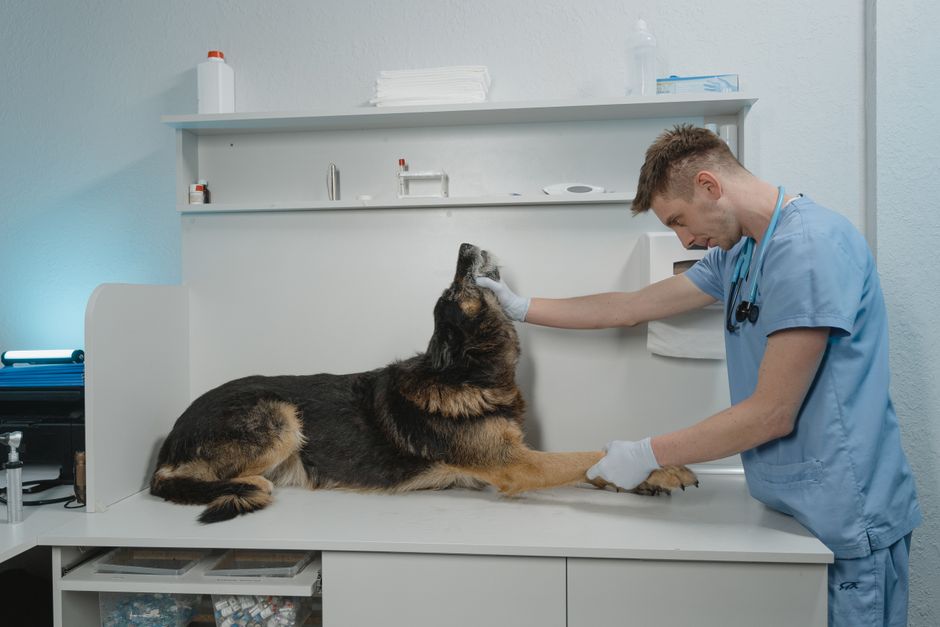
When a veterinary clinic runs day and night shifts, the handover is where patient safety lives or dies. I watched a mid-size clinic lose an overnight cat because the outgoing vet mentioned "stable" in passing, and the incoming vet assumed that meant no active monitoring was needed. It didn't. The cat crashed at 3 a.m., and nobody knew it needed closer checks.
What to Include in a Veterinary Shift Handover
Every handover should follow the same sequence so nothing competes for attention.
- Inpatients by cage or ward number. List each patient, species, reason for admission, current status, and any changes since admission. Flag anything unstable, post-operative, or on IV fluids.
- Medications due. List every drug, dose, route, and time scheduled for the incoming shift. Include medications already given so nothing is doubled.
- Pending diagnostics and results. Note lab work, imaging, or consults waiting, and who is responsible for following up.
- Owner callbacks. List owners expecting calls, the reason, preferred contact time, and whether results are normal or abnormal.
- Open tasks and supplies. Mention low stock items, equipment issues, or facility problems the next shift needs to know.
Copy/Paste Handover Template
## Shift Handover — [Date] [Time]

### Inpatients
| Cage | Patient | Species | Condition | Key Treatments | Next Check |
|------|---------|---------|-----------|----------------|------------|
|      |         |         |           |                |            |

### Medications Due This Shift
| Time | Patient | Drug | Dose | Route | Given? |
|------|---------|------|------|-------|--------|
|      |         |      |      |       |        |

### Pending Diagnostics
| Patient | Test | Ordered By | Result Due | Follow-Up |
|---------|------|------------|------------|-----------|
|         |      |            |            |           |

### Owner Callbacks
| Owner | Patient | Reason | Preferred Time | Status |
|-------|---------|--------|----------------|--------|
|       |         |        |                |        |

### Open Issues
- Supplies low:
- Equipment down:
- Notes:
Good vs Bad Handover Notes
Bad: "Mr. Whiskers is stable. Owner will call."
Good: "Mr. Whiskers, cage 4, post-spay. TPR normal at 22:00. IV fluids running at 5 ml/hr. Owner callback at 08:00 for suture removal update — normal healing expected."
Bad: "Meds are on the chart."
Good: "Buprenorphine 0.02 mg SC due at 06:00 for cage 2. Last given 22:00 by night tech. Pain score was 2/4."
Manager Scan (2-Minute Digest Example)
- How many inpatients are currently unstable or post-operative?
- Are any critical medications due in the next 2 hours without a nurse assigned?
- Which owners are waiting on abnormal results and have not been called yet?
- Are there supply or equipment issues that could delay care tomorrow?
Tool tip (AiAdvisoryBoard.me): Use the same Plan → Fact → Gap logic for your clinic handover: what was planned for the patient, what actually happened, and what gap needs the next shift to close. This keeps the handover focused on patient outcomes, not just task completion. See how the 7-day diagnostic works.
Micro-Case (What Changes After 7–14 Days)
A 40-person veterinary clinic replaced verbal end-of-day handovers with a written inpatient and callback log. Within two weeks, the night team stopped waking the day vet for information that should have been written down. The owner found that medication timing errors dropped because each shift started with the same visible list. Decisions about which patients needed overnight checks were made before the shift changed, not during a crisis.
Note on this case: This example is illustrative — based on typical patterns we observe with companies of 30–500 employees, not a single named client. Specific numbers are rounded approximations of common ranges, not guarantees.
FAQ
Who owns the handover — the person leaving or the person arriving?
The outgoing team owns accuracy. They must write down what is true, not what they hope is true. The incoming team owns verification — they ask questions and confirm before accepting responsibility.
Should callbacks be included in every handover, or only urgent ones?
Include all callbacks owners are expecting, even routine ones. A routine callback that gets skipped becomes an urgent complaint by morning.
What if the clinic is small and only two people overlap?
Use the same template. A five-minute written handover is faster than a fifteen-minute verbal one where someone forgets to mention a cat in cage 3.
Can this work for emergency-only overnight shifts?
Yes. Emergency clinics benefit most because patient turnover is high and context is easily lost between short overlaps.
A solid shift handover is not paperwork. It is the moment responsibility moves from one pair of hands to another without anything falling through. Start with the template above, run it for one week, and adjust the fields your team actually uses.
If you want a system that surfaces the Plan → Fact → Gap automatically — every day, across the company — see how the 7-day diagnostic works. https://aiadvisoryboard.me/?lang=en
Frequently Asked Questions
Read with AI
Open this article in your assistant — it will summarize it and help apply it to your company.
Show the prompt
Read the article https://aiadvisoryboard.me/blog/veterinary-clinic-shift-handover-inpatients-meds-callbacks.md and summarize the key points. Then ask me about my company (industry, team size, what takes the most time) and explain which ideas from the article apply to us and where to start.
The pillar guide for "Role-Based Reports" linking every article in this cluster.

Implements AI agents in companies and teaches founders and their teams to work with them — through courses and corporate programs.
This article was prepared with AI assistance, based on Yaroslav Maxymovych's methodology and materials. Spotted an inaccuracy — let us know via the form below.
A template is good. A system where the report writes itself is better
A 10-minute daily ritual for every employee: plan + fact + blockers. Implemented in 1 day. Teams that write down their plans hit their goals 42% more often.
AI adoption resources — one email
Leave your email to receive a welcome email with blog resources. There is no regular newsletter at present
No spam. Unsubscribe anytime.
Related Articles
Board Update for Bootstrapped Companies With an Advisory Board
A practical guide to writing board updates for bootstrapped companies with an advisory board: structure, metrics, cadence, and a copy/paste template that gets advisors to actually help.
Read more
AI Decision Point 5 — The 90-Day Vendor Review: Kill, Scale, or Renegotiate
At day 90, an AI vendor relationship needs a hard decision: keep, renegotiate, or kill. Here is how to run the review without theater.
Read more
Standup Format for Two Cofounders Running a Company
A lightweight async standup format built specifically for two cofounders running a company. Use Plan → Fact → Gap to surface blockers early and replace unnecessary meetings with a written daily sync.
Read more