Claude Sonnet 4.5
At a glance
- Price per 1M tokens (input)
- $3.00
- Price per 1M tokens (output)
- $15.00
- Context
- 1,000,000 tokens
- Free access
- yes (see below)
Refreshed daily; data verified September 29, 2026. Published August 12, 2026.
Claude Sonnet 4.5 is aimed at enterprises that need reliable reasoning across text and images while integrating external services. It works well for tasks such as analyzing visual documents, generating detailed reports, and automating workflows that require step‑by‑step logic. The model’s strength lies in Anthropic’s safety‑first training and its unified approach to language, vision, and tool calling, allowing developers to invoke functions directly from the model’s output. It is especially useful when a project calls for transparent decision paths and the ability to fetch up‑to‑date data through APIs.
Specifications & pricing
| Input (per 1M tokens) | $3.00 |
|---|---|
| Output (per 1M tokens) | $15.00 |
| Cache read (per 1M tokens) | $0.30 |
| Cache write (per 1M tokens) | $3.75 |
| Context window | 1,000,000 tokens |
| Max output | 64,000 tokens |
| Capabilities | images, tool calling, reasoning |
LiteLLM community dataset (MIT), verified September 29, 2026. Official Anthropic pricing.
What Claude Sonnet 4.5 would cost on your workload — run it through the cost calculator →
Where to try Claude Sonnet 4.5 for free
- Anthropic offers a free chat — Claude (free plan). A vendor's free chat may run a different model from the same family — the exact model is not guaranteed.
- 🎁 On our promo-codes page: Claude Code Guest Pass — a community invite.
Frequently asked questions
What types of business problems benefit most from Claude Sonnet 4.5?+
The model shines on problems that combine visual information with logical processing, such as reviewing scanned contracts, extracting data from charts, creating summaries that reference images, and orchestrating actions through API calls based on the content it reads.
How can a development team start using Claude Sonnet 4.5 in an existing application?+
Teams can access the model through Anthropic’s standard API endpoint, sending a prompt that may include text and optional image data. When tool calling is needed, the request includes a description of the functions the model is allowed to invoke, and the API returns a structured call that the application can execute.
In what ways does Claude Sonnet 4.5 differ from earlier Claude Sonnet releases?+
Compared with prior releases, this version adds native image comprehension, offers more consistent step‑by‑step reasoning, and provides a tighter integration for tool calling that reduces the need for manual parsing of model output.
What limitations should users keep in mind when deploying Claude Sonnet 4.5?+
While the model is robust, it can still produce inaccurate details if the source material is ambiguous, it only supports common image formats, and tool calling requires explicit function definitions; unexpected calls are filtered out for safety.
Comparisons
Compare with others
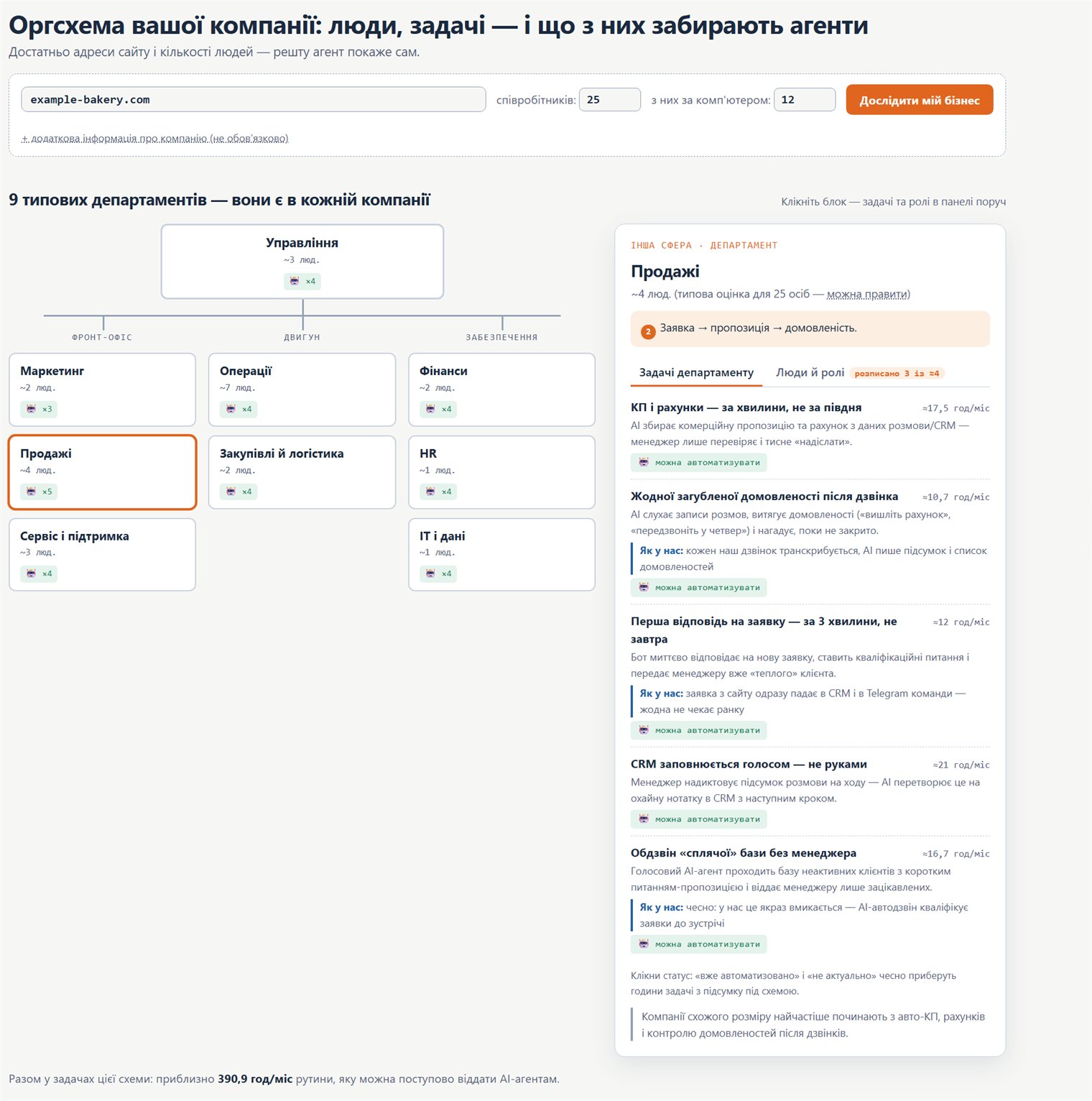
Org chart: how to move your company onto AI
A practical map: which company roles and processes AI agents can take over, where to start, and in what order to roll it out.