Gemini 2.5 Flash Lite Preview 06.17
At a glance
- Price per 1M tokens (input)
- $0.10
- Price per 1M tokens (output)
- $0.40
- Context
- 1,048,576 tokens
- Free access
- yes (see below)
Refreshed daily; data verified September 29, 2026. Published August 12, 2026, last price change August 28, 2026.
The Gemini 2.5 Flash Lite Preview model is aimed at developers and business analysts who need rapid, on‑device insight from images combined with structured reasoning. It excels at visual classification, extracting data from photographs, and orchestrating external services through tool calling (the ability to invoke predefined functions). Its design emphasizes lightweight performance while still supporting step‑by‑step logical chains, which sets Google’s approach apart by tightly integrating vision and tool use within a single prompt.
Specifications & pricing
| Input (per 1M tokens) | $0.10 |
|---|---|
| Output (per 1M tokens) | $0.40 |
| Cache read (per 1M tokens) | $0.01 |
| Context window | 1,048,576 tokens |
| Max output | 65,535 tokens |
| Capabilities | images, tool calling, reasoning |
LiteLLM community dataset (MIT), verified September 22, 2026. Official Google (Gemini) pricing.
Price history
| Date | Input / 1M | Output / 1M |
|---|---|---|
| August 9, 2026 (first record) | $0.10 | $0.40 |
| August 28, 2026 | $0.10 | $0.40 |
Where to try Gemini 2.5 Flash Lite Preview 06.17 for free
- Google (Gemini) offers a free chat — Gemini (free plan). A vendor's free chat may run a different model from the same family — the exact model is not guaranteed.
- 🎁 On our promo-codes page: Gemini for free: access and discounts.
Frequently asked questions
What types of tasks benefit most from this model?+
It is well suited for image‑driven workflows such as product tagging, receipt scanning, and visual quality checks, especially when the results need to trigger downstream actions via tool calling.
How can I begin using Gemini 2.5 Flash Lite Preview in my system?+
Start by accessing the model through Google’s cloud interface, configure the function definitions you want the model to call, and then send prompts that include both image data and any required parameters. The platform provides sample code to illustrate the request‑response cycle.
In what ways does this model differ from other Gemini offerings?+
Unlike larger Gemini variants that prioritize maximum accuracy, this Flash Lite version trades a modest amount of precision for faster inference and lower resource consumption, making it ideal for edge or mobile deployments while still supporting tool calling and step‑by‑step reasoning.
What limitations should I keep in mind?+
The model may produce less detailed descriptions for highly complex scenes, and its tool calling relies on functions you explicitly define, so unexpected actions are not possible without prior setup. Additionally, performance can vary with image quality.
Compare with others
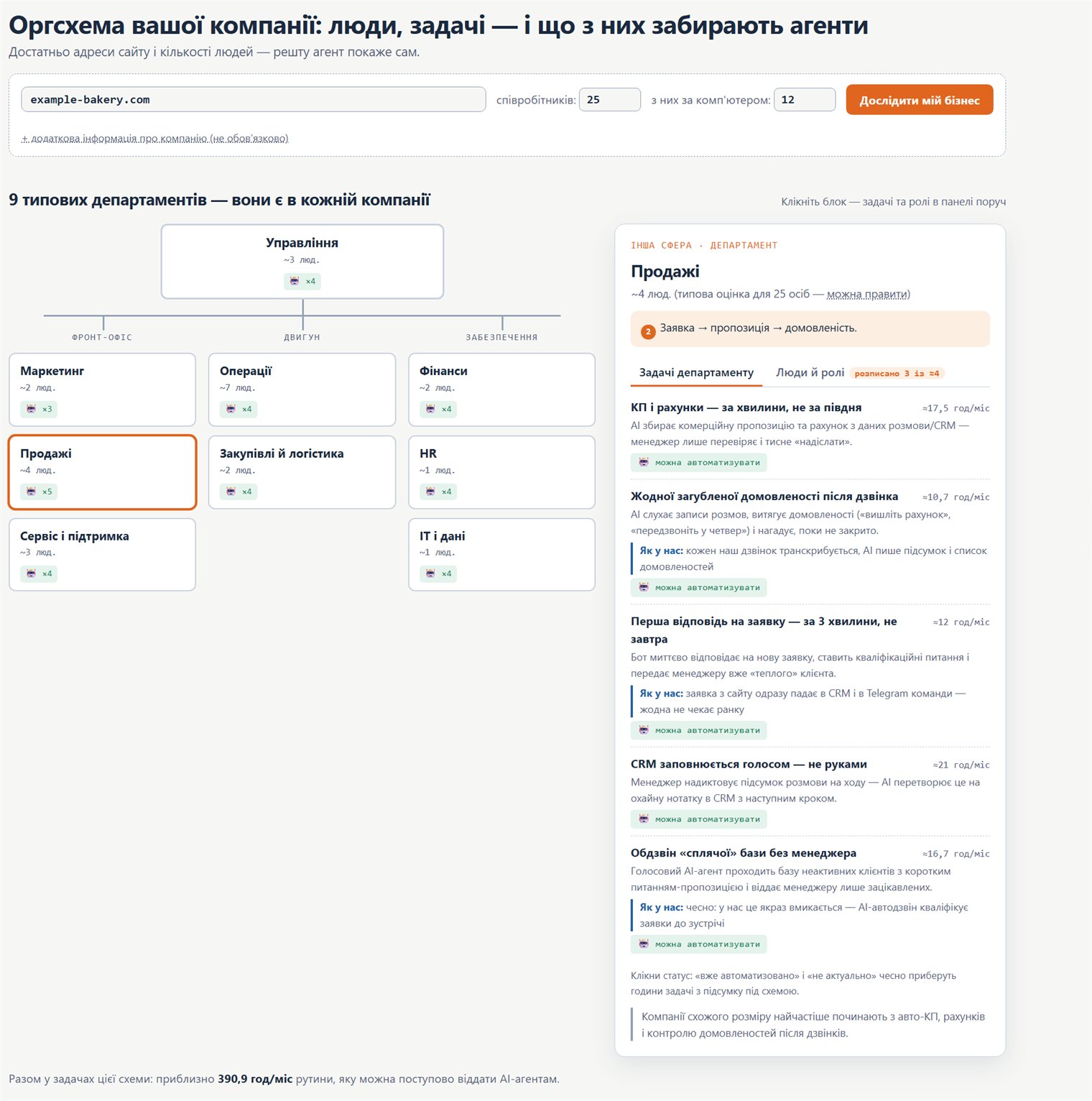
Org chart: how to move your company onto AI
A practical map: which company roles and processes AI agents can take over, where to start, and in what order to roll it out.