Gemini 4 Hydrogen
At a glance
- Price per 1M tokens (input)
- $1.50
- Price per 1M tokens (output)
- $7.50
- Context
- 1,048,576 tokens
- Free access
- yes (see below)
Refreshed daily; data verified November 16, 2026. Published November 14, 2026.
Gemini 4 Hydrogen by Google is a multimodal language model built for teams that need to process both text and images within a single workflow. It is well suited to tasks such as visual document analysis, image captioning, and applications that require step-by-step reasoning before taking action. The model supports tool calling, which lets it interact with external software functions to retrieve data or perform operations. Google's approach centers on integrating multimodal understanding with agent-like capabilities in one model family.
Specifications & pricing
| Input (per 1M tokens) | $1.50 |
|---|---|
| Output (per 1M tokens) | $7.50 |
| Cache read (per 1M tokens) | $0.075 |
| Context window | 1,048,576 tokens |
| Max output | 1,048,576 tokens |
| Capabilities | images, tool calling, reasoning |
LiteLLM community dataset (MIT), verified November 16, 2026. Official Google (Gemini) pricing.
What Gemini 4 Hydrogen would cost on your workload — run it through the cost calculator →
Where to try Gemini 4 Hydrogen for free
- Google (Gemini) offers a free chat — Gemini (free plan). A vendor's free chat may run a different model from the same family — the exact model is not guaranteed.
- 🎁 On our promo-codes page: Gemini for free: access and discounts.
Frequently asked questions
What is this model good for?+
It handles image understanding, document reasoning, and workflows that require multi-step logic. Tool calling lets it connect to external systems to fetch information or trigger actions.
How do I get started?+
Access the model through Google's developer platform, set up authentication, and send requests using the provided API or console. You can begin with text prompts and add image inputs as needed.
How does it differ from other models in the Gemini line?+
Sibling models vary in size and intended use. This variant emphasizes multimodal input and reasoning depth, while other versions may prioritize speed, lower resource use, or specialized tasks.
What are its limitations?+
It can misinterpret complex or low-quality images, and reasoning chains may occasionally produce incorrect conclusions. Tool calling depends on well-defined function schemas and reliable external services.
Compare with others
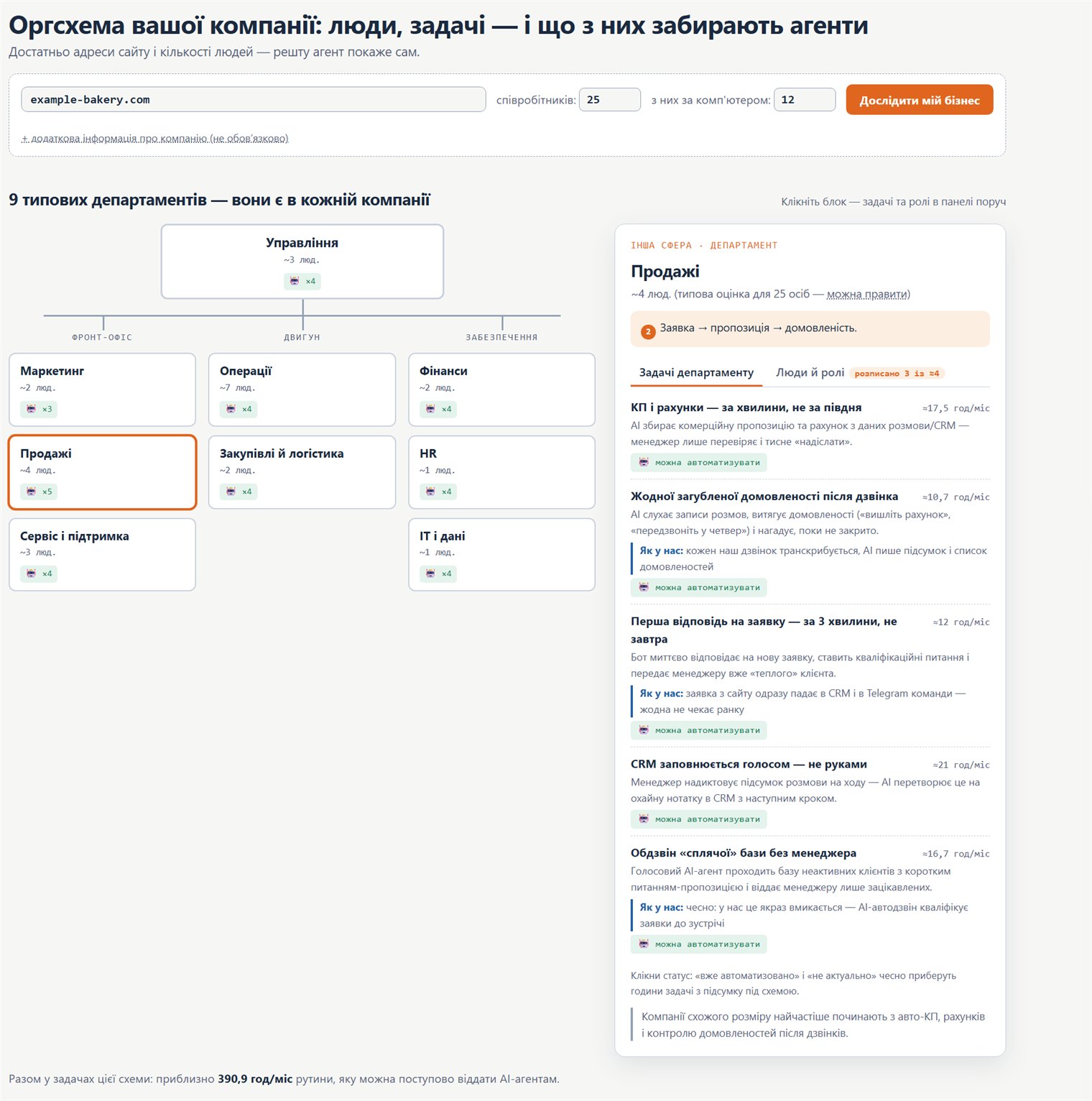
Org chart: how to move your company onto AI
A practical map: which company roles and processes AI agents can take over, where to start, and in what order to roll it out.