Gemini 4 Neon
At a glance
- Price per 1M tokens (input)
- $3.00
- Price per 1M tokens (output)
- $15.00
- Context
- 1,048,576 tokens
- Free access
- yes (see below)
Refreshed daily; data verified November 20, 2026. Published November 20, 2026.
Gemini 4 Neon by Google is a multimodal large language model designed for business teams that need to process images and text together. It supports tool calling, which lets the model interact with external software and APIs to complete workflows automatically. Its step-by-step reasoning capability helps with complex tasks that require logical breakdowns. Google’s approach integrates this model into its broader cloud and AI ecosystem, giving organizations a single vendor path for model deployment alongside existing infrastructure.
Specifications & pricing
| Input (per 1M tokens) | $3.00 |
|---|---|
| Output (per 1M tokens) | $15.00 |
| Cache read (per 1M tokens) | $0.15 |
| Context window | 1,048,576 tokens |
| Max output | 1,048,576 tokens |
| Capabilities | images, tool calling, reasoning |
LiteLLM community dataset (MIT), verified November 20, 2026. Official Google (Gemini) pricing.
What Gemini 4 Neon would cost on your workload — run it through the cost calculator →
Where to try Gemini 4 Neon for free
- Google (Gemini) offers a free chat — Gemini (free plan). A vendor's free chat may run a different model from the same family — the exact model is not guaranteed.
- 🎁 On our promo-codes page: Gemini for free: access and discounts.
Frequently asked questions
What is this model good for?+
It is suited for tasks that combine visual input with text analysis, such as reviewing documents with charts, extracting information from scanned forms, and answering questions about product images. Tool calling allows it to connect to business applications and take actions like updating records or querying databases. Step-by-step reasoning supports multi-stage problems in areas like policy review, troubleshooting, and planning.
How do I get started?+
Access the model through Google’s AI platform by setting up a project, enabling the relevant API, and authenticating with your credentials. You can send prompts through the API or use the provided console to test responses. Integration guides and code samples are available to help you connect the model to your applications.
How does it differ from sibling models in the line?+
This model is positioned for multimodal work and advanced reasoning, while other variants may prioritize speed, lower resource use, or specific language tasks. The right choice depends on whether your priority is image understanding, tool integration, or efficient text-only processing.
What are its limitations?+
Image understanding depends on image quality and clarity, and tool calling requires properly configured external systems. Step-by-step reasoning can still produce errors on highly specialized or ambiguous topics. Outputs should be reviewed for accuracy before use in critical business decisions.
Compare with others
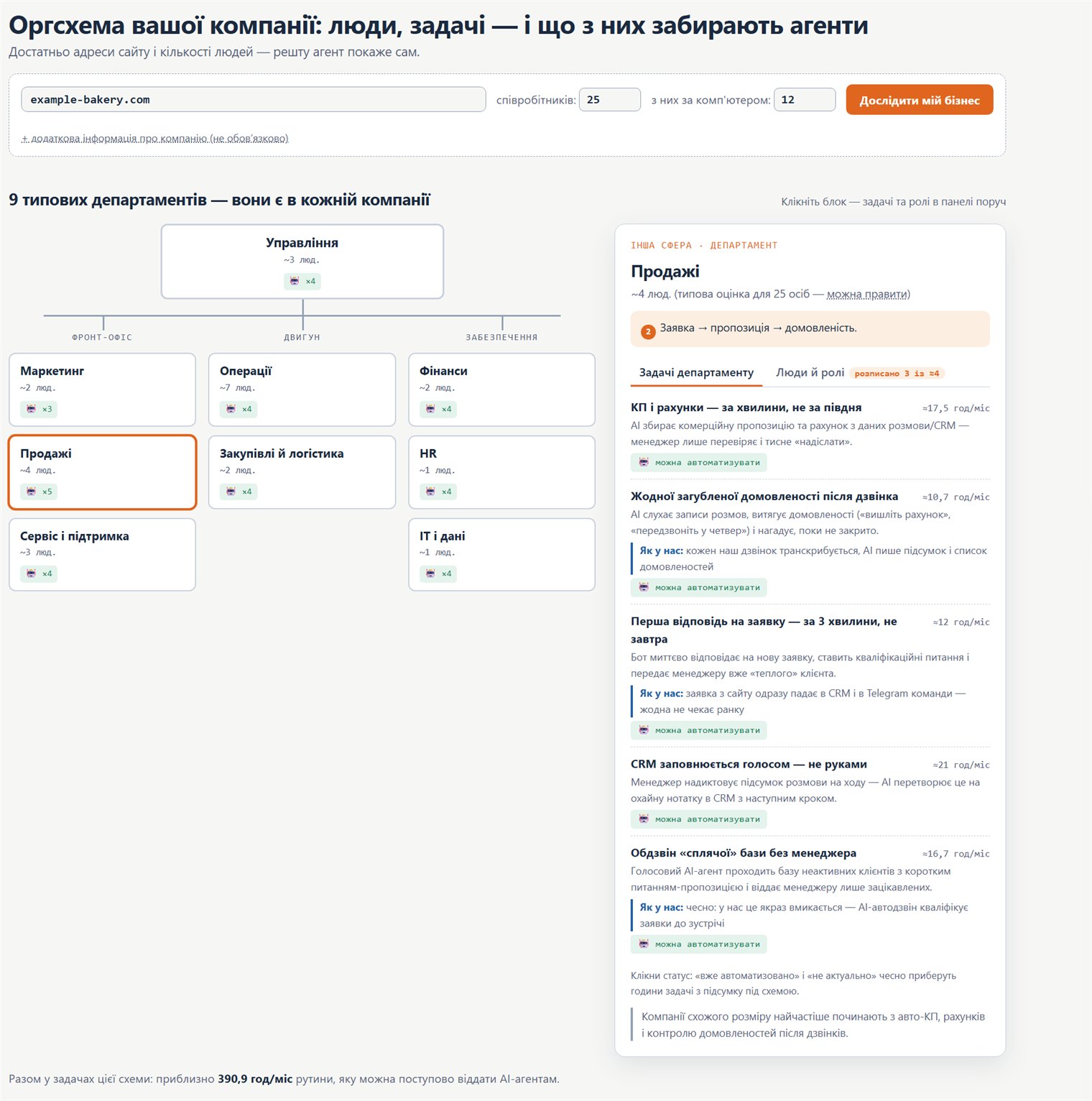
Org chart: how to move your company onto AI
A practical map: which company roles and processes AI agents can take over, where to start, and in what order to roll it out.