Grok 3 Mini Beta
At a glance
- Price per 1M tokens (input)
- $1.25
- Price per 1M tokens (output)
- $2.50
- Context
- 131,072 tokens
- Free access
- yes (see below)
Refreshed daily; data verified September 29, 2026. Published August 12, 2026, last price change August 30, 2026.
Grok 3 Mini Beta is aimed at developers and small teams that need a lightweight reasoning engine with built‑in tool calling. It excels at automating workflows that involve external APIs, data extraction, and step‑by‑step problem solving. The model’s architecture emphasizes tight integration of function calls with chain‑of‑thought reasoning, allowing it to break complex queries into manageable actions. xAI’s approach focuses on deterministic tool use rather than probabilistic guessing, which reduces the need for extensive prompt engineering. It is positioned as a cost‑effective option for routine business automation without the overhead of larger models.
Specifications & pricing
| Input (per 1M tokens) | $1.25 |
|---|---|
| Output (per 1M tokens) | $2.50 |
| Cache read (per 1M tokens) | $0.20 |
| Context window | 131,072 tokens |
| Max output | 131,072 tokens |
| Capabilities | tool calling, reasoning |
LiteLLM community dataset (MIT), verified September 22, 2026. Official xAI pricing.
What Grok 3 Mini Beta would cost on your workload — run it through the cost calculator →
Price history
| Date | Input / 1M | Output / 1M |
|---|---|---|
| August 9, 2026 (first record) | $0.30 | $0.50 |
| August 30, 2026 | $1.25 | $2.50 |
Where to try Grok 3 Mini Beta for free
- xAI offers a free chat — Grok (limited free access). A vendor's free chat may run a different model from the same family — the exact model is not guaranteed.
Frequently asked questions
What types of business problems is Grok 3 Mini Beta best suited for?+
The model shines when a task can be expressed as a sequence of discrete actions, such as retrieving records from a database, invoking a third‑party service, or generating a structured report after intermediate calculations. It also handles conversational clarification that requires step‑by‑step reasoning before invoking a tool.
How do I integrate the model into my existing system?+
Integration follows a standard API pattern: send a request that includes the user prompt and, optionally, a schema describing the functions you want the model to call. The response will either contain a direct answer or a structured call specification that your application can execute before feeding the result back to the model.
In what ways does Grok 3 Mini Beta differ from the larger Grok models?+
Compared with the flagship offerings, the Mini variant trades raw generative capacity for faster response times and lower resource consumption. Its training emphasizes reliable tool invocation and concise reasoning, making it a practical choice for routine automation rather than expansive creative generation.
What limitations should I be aware of when using this model?+
The model works best with well‑defined function signatures and may struggle with ambiguous or overly open‑ended requests. Its context window is smaller than that of the flagship models, so very long documents may need to be pre‑summarized, and occasional mis‑routing of tool calls can require fallback handling in your code.
Compare with others
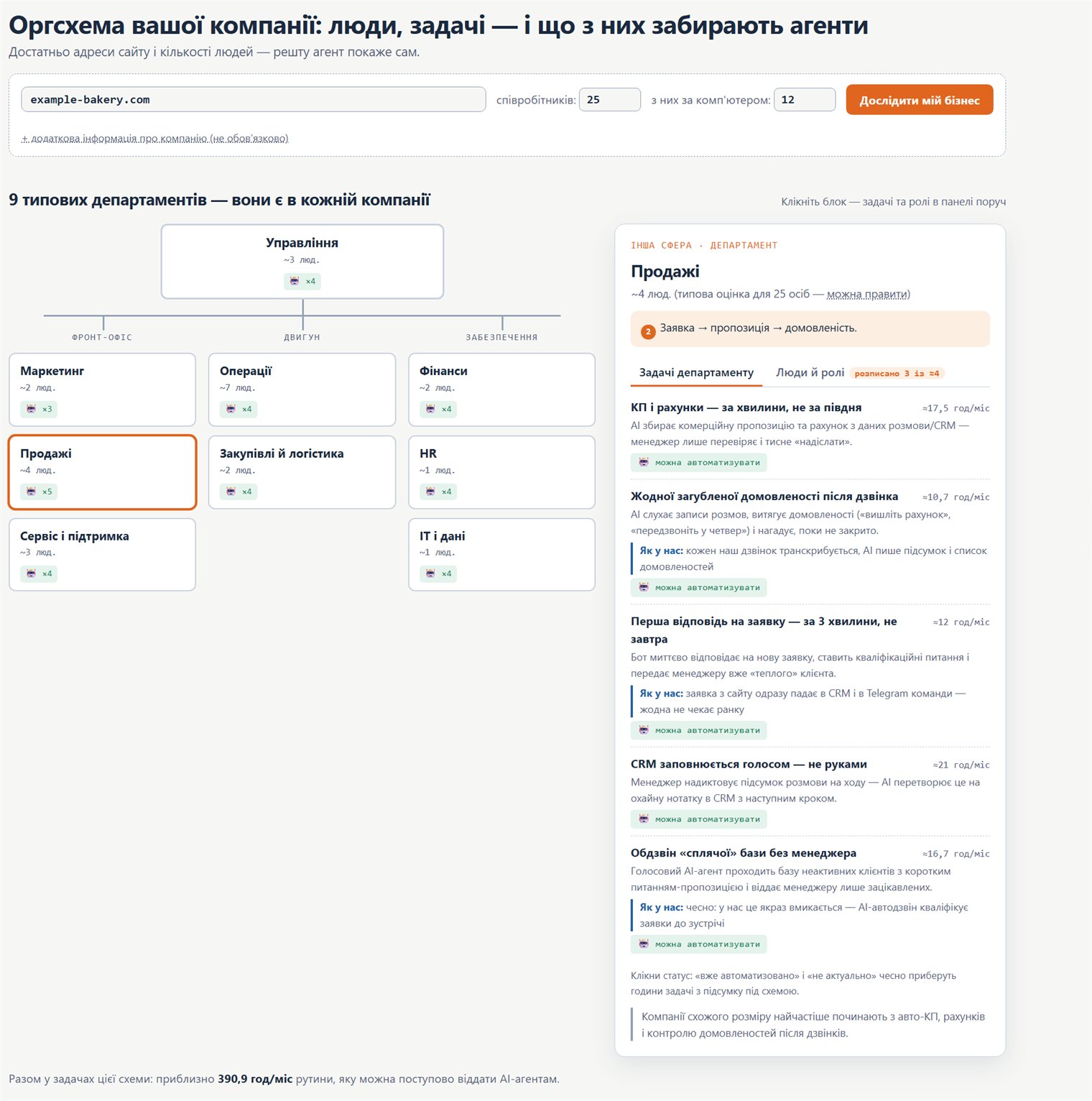
Org chart: how to move your company onto AI
A practical map: which company roles and processes AI agents can take over, where to start, and in what order to roll it out.