Grok 4.20.0309 Reasoning
At a glance
- Price per 1M tokens (input)
- $1.25
- Price per 1M tokens (output)
- $2.50
- Context
- 1,000,000 tokens
- Free access
- yes (see below)
Refreshed daily; data verified September 29, 2026. Published August 12, 2026, last price change August 12, 2026.
Grok 4.20.0309 Reasoning by xAI is built for technical teams and analysts who need a model that can work through complex, multi-step problems while also understanding visual inputs like charts, diagrams, and screenshots. It suits tasks such as data analysis, code debugging, document summarization with images, and any workflow that benefits from transparent, step-by-step reasoning. The vendor's approach emphasizes a reasoning engine that explicitly breaks down its logic before answering, combined with native tool calling, which lets the model invoke external functions or APIs to fetch live data or perform actions. This makes it a practical choice for integrating into automated pipelines where accuracy and verifiability matter more than raw speed.
Specifications & pricing
| Input (per 1M tokens) | $1.25 |
|---|---|
| Output (per 1M tokens) | $2.50 |
| Cache read (per 1M tokens) | $0.20 |
| Context window | 1,000,000 tokens |
| Max output | 1,000,000 tokens |
| Capabilities | images, tool calling, reasoning |
LiteLLM community dataset (MIT), verified September 29, 2026. Official xAI pricing.
What Grok 4.20.0309 Reasoning would cost on your workload — run it through the cost calculator →
Price history
| Date | Input / 1M | Output / 1M |
|---|---|---|
| August 9, 2026 (first record) | $2.00 | $6.00 |
| August 12, 2026 | $1.25 | $2.50 |
Where to try Grok 4.20.0309 Reasoning for free
- xAI offers a free chat — Grok (limited free access). A vendor's free chat may run a different model from the same family — the exact model is not guaranteed.
Frequently asked questions
What is this model best used for in a business context?+
It is ideal for tasks that require logical deduction and handling mixed inputs, such as analyzing financial reports with tables and graphs, troubleshooting code by reading error screenshots, or generating structured summaries from complex documents. Because it can call external tools, it can also fetch real-time information or update databases as part of a workflow, making it useful for automation and decision support.
How do I get started with integrating this model?+
You can access it through the provider's API, where you send a prompt with text and optionally an image, and receive a response that includes both the reasoning trace and the final answer. If you need tool calling, you define the functions in your request, and the model will output a structured call for you to execute and return results. Most users start with a simple test prompt to verify the reasoning quality, then gradually add tool definitions and image inputs.
How does this model differ from other models in the Grok line?+
The key difference is its emphasis on explicit step-by-step reasoning before producing a final answer, which improves traceability and reduces errors on complex logic. It also has integrated image understanding and tool calling as first-class features, whereas some sibling models may focus on faster chat responses or larger knowledge recall. This model is designed for tasks where you need to see the 'why' behind an answer, not just the answer itself.
What are the main limitations I should be aware of?+
The reasoning process takes more time and compute compared to a standard chat model, so it is not ideal for real-time conversational use. It may also struggle with very ambiguous or poorly specified tasks, and while it can understand images, it is not a dedicated vision model for fine-grained object detection. Additionally, tool calling requires you to have a secure and well-defined function schema, as the model will rely on your API's responses to continue its reasoning.
Compare with others
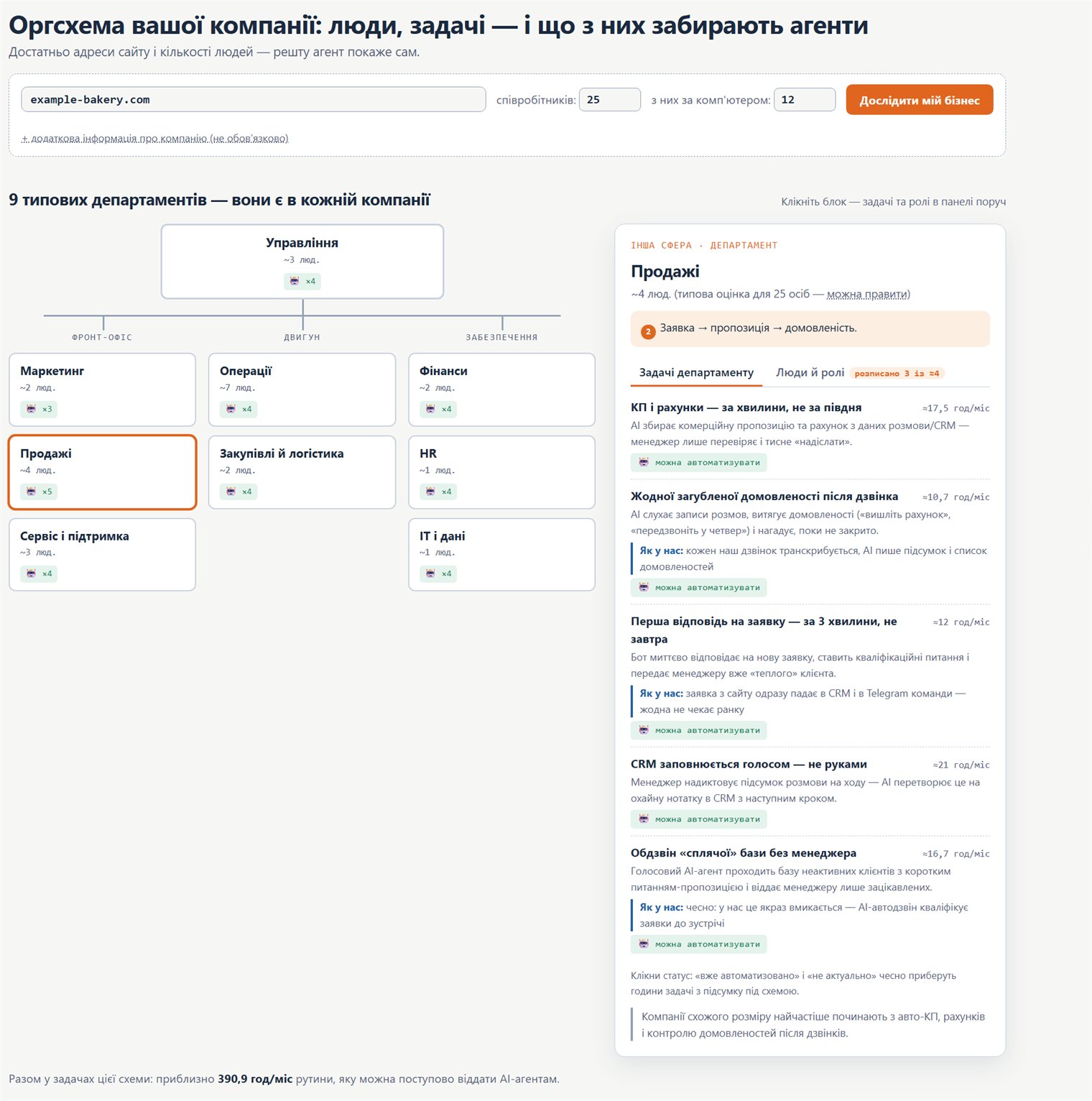
Org chart: how to move your company onto AI
A practical map: which company roles and processes AI agents can take over, where to start, and in what order to roll it out.