Grok 4.20 Beta Latest Reasoning
At a glance
- Price per 1M tokens (input)
- $1.25
- Price per 1M tokens (output)
- $2.50
- Context
- 1,000,000 tokens
- Free access
- yes (see below)
Refreshed daily; data verified September 25, 2026. Published September 25, 2026.
Grok 4.20 Beta Latest Reasoning by xAI is designed for developers and technical teams building applications that require deep visual analysis combined with logical reasoning. It excels at tasks such as interpreting complex diagrams, extracting insights from visual data, and executing multi-step workflows through tool calling, which allows the model to interact with external functions or APIs. xAI’s approach emphasizes integrating reasoning capabilities directly into the model’s core architecture, enabling more coherent and traceable decision-making when handling ambiguous or layered inputs.
Specifications & pricing
| Input (per 1M tokens) | $1.25 |
|---|---|
| Output (per 1M tokens) | $2.50 |
| Cache read (per 1M tokens) | $0.20 |
| Context window | 1,000,000 tokens |
| Max output | 1,000,000 tokens |
| Capabilities | images, tool calling, reasoning |
LiteLLM community dataset (MIT), verified September 25, 2026. Official xAI pricing.
Where to try Grok 4.20 Beta Latest Reasoning for free
- xAI offers a free chat — Grok (limited free access). A vendor's free chat may run a different model from the same family — the exact model is not guaranteed.
Frequently asked questions
What types of tasks is this model best suited for?+
This model is ideal for applications involving image interpretation, such as analyzing technical schematics or medical scans, where understanding visual context is critical. It also supports step-by-step reasoning, making it useful for debugging code, planning multi-stage processes, or verifying logical consistency in data-driven workflows. Tool calling enables it to retrieve real-time data or perform actions like querying databases or triggering automation scripts.
How does one begin using this model in a production environment?+
Access is typically provided through xAI’s API platform, where users can send prompts that include both text and image inputs. Developers should structure requests to clearly define the desired output format and specify any tools the model may invoke. Starting with small-scale tests helps validate performance on specific use cases before broader integration.
How does this model differ from earlier versions in the Grok series?+
Compared to prior releases, this version places stronger emphasis on unified reasoning across modalities, particularly improving how the model connects visual observations with logical inference. Earlier models may have treated image understanding and reasoning as separate stages, whereas this release aims for tighter integration, reducing errors when interpreting complex visual scenes that require sequential deduction.
What are the current limitations users should be aware of?+
The model may struggle with highly abstract or ambiguous visual inputs where contextual clues are sparse. Additionally, while tool calling expands functionality, the reliability of external tool use depends on the quality and availability of the invoked functions. Users should implement fallback mechanisms and validate outputs, especially in high-stakes domains like healthcare or finance.
Compare with others
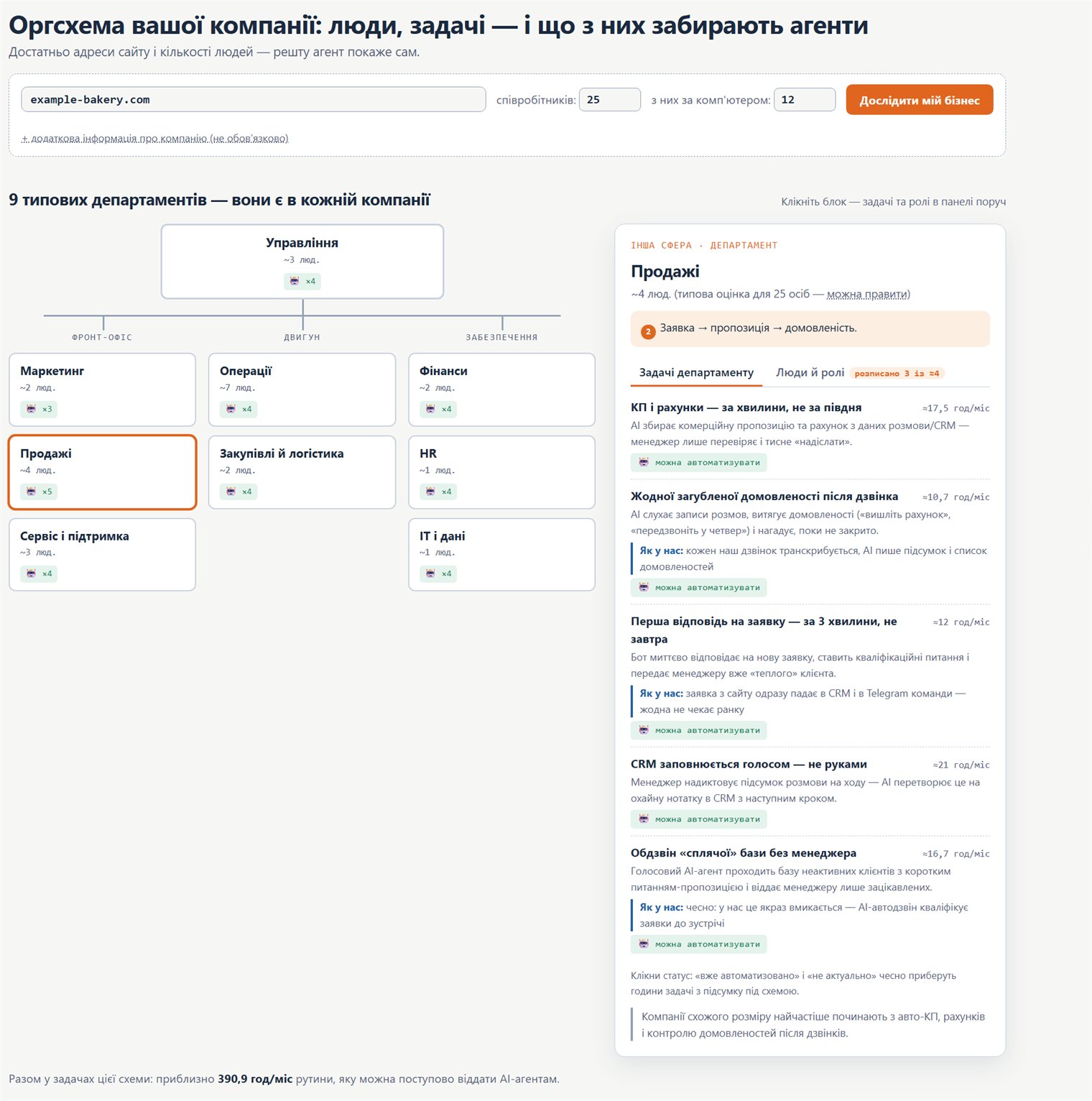
Org chart: how to move your company onto AI
A practical map: which company roles and processes AI agents can take over, where to start, and in what order to roll it out.