Grok 4.20 Beta Non Reasoning
At a glance
- Price per 1M tokens (input)
- $1.25
- Price per 1M tokens (output)
- $2.50
- Context
- 1,000,000 tokens
- Free access
- yes (see below)
Refreshed daily; data verified September 25, 2026. Published September 25, 2026.
Grok 4.20 Beta Non Reasoning by xAI is designed for developers and technical teams building applications that require visual input interpretation and integration with external systems. It supports image understanding to analyze visual content and tool calling to interact with APIs, databases, or custom functions, enabling workflows like automated data extraction from documents or real-time decision-making based on sensor inputs. Unlike fully reasoning-focused variants, this model prioritizes speed and reliability in perception and action tasks, making it suitable for production environments where consistent, low-latency responses are critical. xAI's approach emphasizes tight integration between multimodal perception and executable tool use, reducing the need for complex orchestration layers in agent-based systems.
Specifications & pricing
| Input (per 1M tokens) | $1.25 |
|---|---|
| Output (per 1M tokens) | $2.50 |
| Cache read (per 1M tokens) | $0.20 |
| Context window | 1,000,000 tokens |
| Max output | 1,000,000 tokens |
| Capabilities | images, tool calling |
LiteLLM community dataset (MIT), verified September 25, 2026. Official xAI pricing.
What Grok 4.20 Beta Non Reasoning would cost on your workload — run it through the cost calculator →
Where to try Grok 4.20 Beta Non Reasoning for free
- xAI offers a free chat — Grok (limited free access). A vendor's free chat may run a different model from the same family — the exact model is not guaranteed.
Frequently asked questions
What types of tasks is this model best suited for?+
This model excels in applications needing to interpret images and trigger actions based on that input, such as processing scanned forms, monitoring visual feeds for anomalies, or enabling robots to interact with physical environments through API calls.
How does tool calling work in this model?+
Tool calling allows the model to request and execute predefined functions — like querying a database or sending a message — by generating structured calls that your system can run and return results to, enabling the model to act beyond text generation.
How does this non-reasoning version differ from reasoning-enabled Grok models?+
This version omits extended internal reasoning steps to deliver faster responses for direct perception-to-action tasks, while reasoning variants allocate more compute to complex problem-solving before responding.
What should users know about its limitations?+
The model does not perform deep logical deduction or long-horizon planning; it is optimized for immediate understanding and tool use, so complex multi-step reasoning should be handled externally or via chained calls.
Compare with others
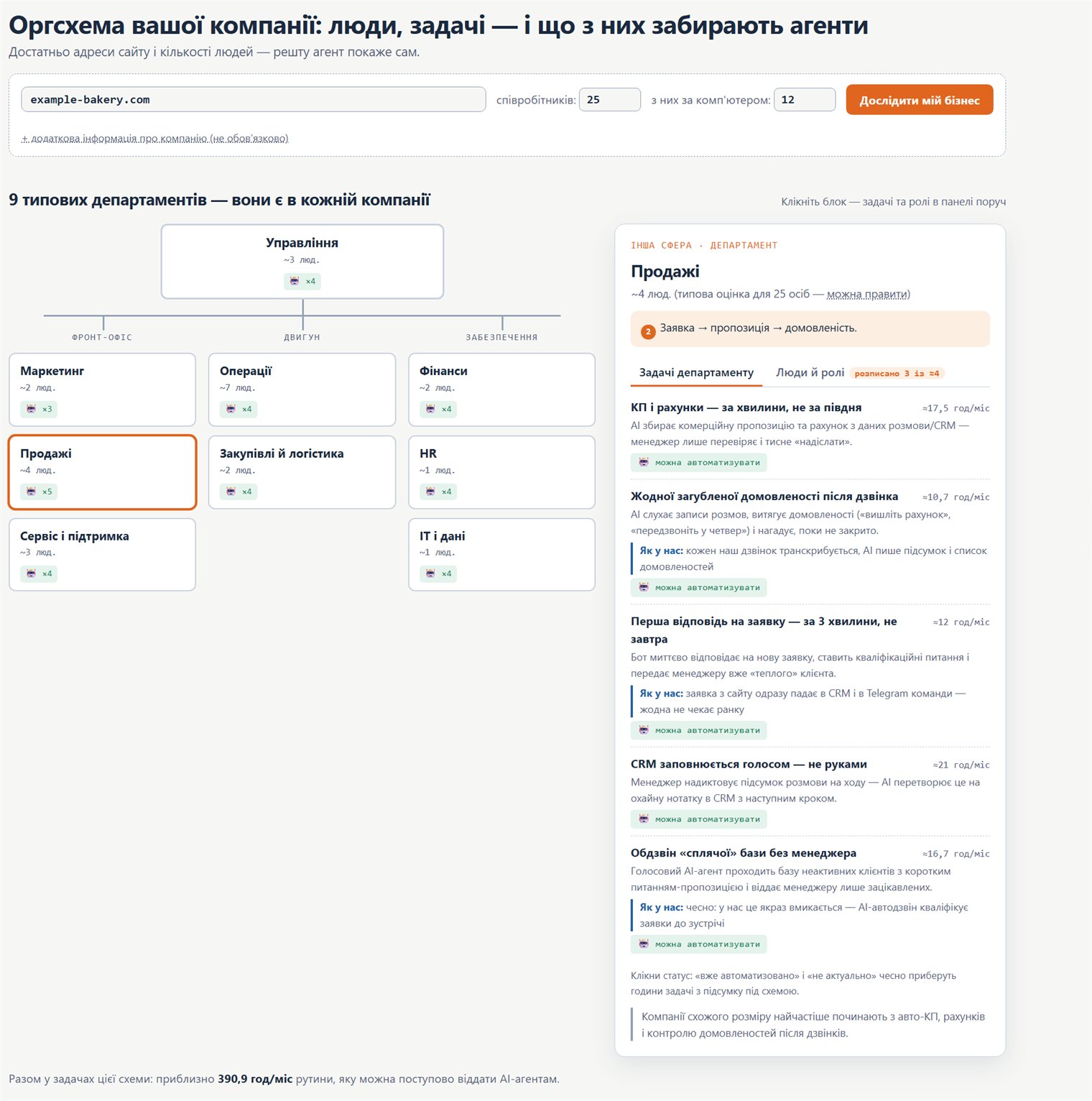
Org chart: how to move your company onto AI
A practical map: which company roles and processes AI agents can take over, where to start, and in what order to roll it out.