Grok 4.20 Beta Reasoning
At a glance
- Price per 1M tokens (input)
- $1.25
- Price per 1M tokens (output)
- $2.50
- Context
- 1,000,000 tokens
- Free access
- yes (see below)
Refreshed daily; data verified September 25, 2026. Published September 25, 2026.
Grok 4.20 Beta Reasoning by xAI is designed for developers and technical teams building applications that require multimodal understanding and autonomous task execution. It excels at interpreting visual inputs while simultaneously reasoning through complex problems using step-by-step logic, making it suitable for workflows involving image analysis, data extraction from documents, or dynamic decision-making in uncertain environments. What distinguishes xAI's approach is the tight integration of reasoning traces with tool usage, allowing the model to not only perceive images but also plan and invoke external functions transparently, which supports auditability and reduces hallucination in action-oriented tasks.
Specifications & pricing
| Input (per 1M tokens) | $1.25 |
|---|---|
| Output (per 1M tokens) | $2.50 |
| Cache read (per 1M tokens) | $0.20 |
| Context window | 1,000,000 tokens |
| Max output | 1,000,000 tokens |
| Capabilities | images, tool calling, reasoning |
LiteLLM community dataset (MIT), verified September 25, 2026. Official xAI pricing.
What Grok 4.20 Beta Reasoning would cost on your workload — run it through the cost calculator →
Where to try Grok 4.20 Beta Reasoning for free
- xAI offers a free chat — Grok (limited free access). A vendor's free chat may run a different model from the same family — the exact model is not guaranteed.
Frequently asked questions
What types of tasks is this model particularly effective for?+
It is effective for tasks that combine visual understanding with logical reasoning and external tool use, such as analyzing charts in reports, extracting structured data from forms, or guiding robotic process automation where decisions depend on both image content and contextual logic.
How does a developer begin using this model in an application?+
Developers can access the model through xAI's API by specifying the model identifier in their requests, then sending multimodal inputs that include images and text prompts, while defining available functions for the model to call during reasoning.
How does this model differ from earlier versions in the Grok series?+
This version places stronger emphasis on explicit reasoning steps and reliable tool invocation compared to prior releases, which focused more on raw language fluency or image recognition without structured reasoning traces.
What are current limitations users should be aware of?+
The model may struggle with highly abstract visual metaphors or ambiguous instructions that require cultural context beyond the image, and its tool calling reliability depends on clear function definitions and well-scoped operational boundaries set by the developer.
Compare with others
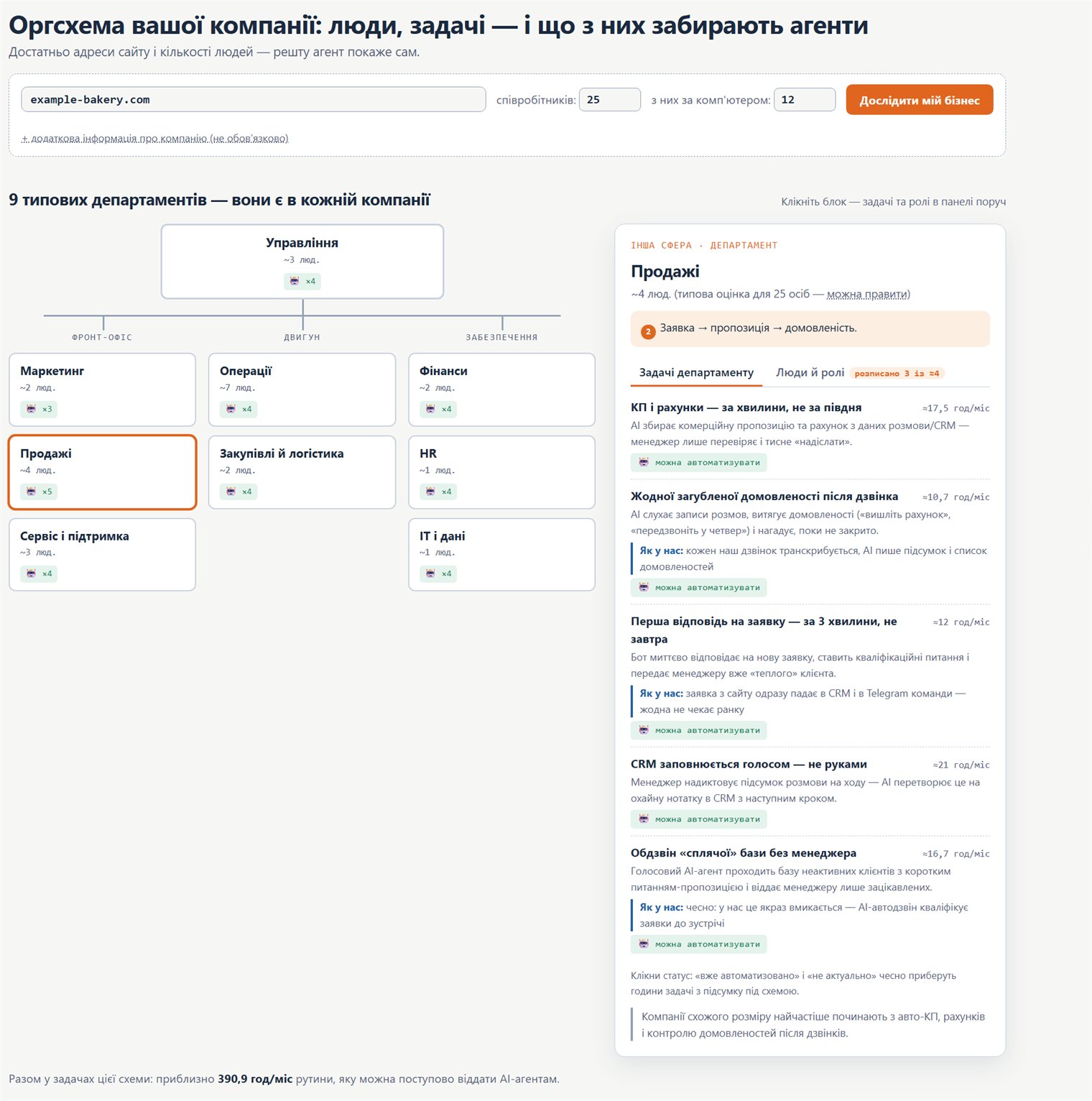
Org chart: how to move your company onto AI
A practical map: which company roles and processes AI agents can take over, where to start, and in what order to roll it out.