
AI Data Security Policy: How to Protect Company Data from ChatGPT
TL;DR
- •Implement a clear AI usage policy to prevent data leaks.
- •Train the team to distinguish sensitive data and use anonymized or test data for AI.
- •Regularly review and update the rules as AI technologies evolve fast.
Implementing an AI data security policy is essential when adopting AI tools like ChatGPT. It allows you to reap the benefits of artificial intelligence while keeping confidential information safe. This guide shows founders how to create clear rules, train the team, and monitor compliance.
Why Company Data Can Leak Through ChatGPT?
The main reason data leaks occur is that large language models (LLMs) such as ChatGPT are trained on massive amounts of information. When an employee enters confidential data (for example, trade secrets, customer personal data, financial reports) into the public version of ChatGPT, that information can potentially become part of the model's training set or be accessible to third parties. This creates a direct threat to your company and may lead to serious reputational and financial losses. Even if the model's developers claim they do not use your data, the risk remains, especially with free versions of the tool.
What Risks Arise from Uncontrolled AI Use?
Uncontrolled use of AI tools carries several key risks that business owners must understand. First, it is a direct leak of confidential data that can violate non‑disclosure agreements (NDAs) with clients and partners or result in the loss of trade secrets. Second, there is a risk of breaching regulatory requirements such as GDPR if you process EU user data, or other local data‑protection laws. Third, trust from clients and partners can be eroded if they learn of careless handling of their data, which may cost you long‑term contracts and reputation. Finally, careless AI use can create legal precedents and lawsuits that cost far more than training and implementing a proper policy.
Getting Started: Developing an AI Data Security Policy
The first step is to create a clear internal policy on the use of AI tools. It does not need to be a long, complex legal document; rather, it should be an easy‑to‑understand guide for every employee. The goal is not to ban AI but to teach how to use it safely and effectively. Your policy should cover what data can be entered, which tools are allowed or forbidden, and what to do in case of doubt. It is important that the policy be accessible, regularly updated, and clearly explained to all staff.
Definition: An AI usage policy is an internal company document that sets rules and procedures for the safe and responsible use of artificial intelligence by employees to minimize risks.
Checklist: 5 Steps to Safe AI Tool Usage
✅ Step 1: Assess existing risks. Conduct an audit of what data is processed in your company and identify which items are confidential. Ask yourself: "Where is the likelihood of a data leak highest if an employee starts using ChatGPT carelessly?" Understand which processes are most vulnerable. This could involve financial reports, customer personal data, or patented technology.
✅ Step 2: Establish clear rules. Create a document that explains what is allowed and what is not. For example, prohibit entering any data containing personal information, trade secrets, or information protected by an NDA into ChatGPT. Allow only the use of anonymized or public data. If an employee is unsure, they must know where to get clarification.
✅ Step 3: Train the team.
Run mandatory training for all employees who will use AI. This should be a practical session with examples, not a dry briefing. Explain why the rules matter and what consequences the company and individuals may face for violations. Emphasize that the aim is not to limit but to expand their capabilities through AI, safely. /uk/blog/ai-literacy-team-training-guide can help you understand the importance of this step.
✅ Step 4: Adopt safe tools. Consider using corporate versions of AI tools or deploying your own solutions that guarantee data confidentiality. Many vendors offer business solutions where your data is not used to train models. This may be more expensive but far safer. If that is not possible, clearly instruct how to maximally anonymize data before entering it into public models.
✅ Step 5: Regular monitoring and updates. AI technologies evolve quickly, so what was safe yesterday may become vulnerable tomorrow. Regularly review your policy and inform employees of any changes. Monitor AI tool usage in the company (where possible and permitted by law) to spot potential risks early and react promptly.
How to Explain to the Team What 'Sensitive' Data Means
Many employees may not understand what exactly counts as "sensitive" data, so you need to clarify this. Start with concrete examples relevant to your industry and company. These can include bank account numbers, passport details, health data, commercial offers before publication, source code, investment plans, strategic documents. Stress that any information that could harm the company, its clients, or partners if made public is sensitive. Use metaphors: "Imagine you are posting this on a city billboard." If you are unsure whether to share data — do not share it.
Definition: Confidential data is information whose access is restricted and whose disclosure could cause damage to the company, its clients, employees, or partners.
How this works on our side: We run corporate training programs for teams of up to 20 employees. By the end of the program your company will receive at least three working automations, defined by you as priorities, with a money‑back guarantee. We guarantee that the created automations are your company's property and run on your tools, without ties to the contractor. For sensitive processes we use test or anonymized data during the sessions, and an NDA is available on request. https://course.aiadvisoryboard.me/corporate?utm_source=blog&utm_medium=article_body&utm_campaign=corporate
FAQ
Can I completely ban ChatGPT use in the company?
Banning AI tools outright in a company is practically impossible and counterproductive, as it limits opportunities to increase efficiency. It is far more effective to set clear rules and train the team to use these tools safely so they work for the business, not against it.
How can I ensure employees follow the rules?
Compliance is achieved through a combination of training, clear instructions, understanding the consequences of violations, and, if necessary, technical restrictions or monitoring. It is important to build a culture of trust and responsibility where everyone knows their role in protecting company data.
What should I do if an employee accidentally enters confidential data?
It is vital to have a clear response protocol for such incidents. The employee must know whom to contact immediately. This allows you to quickly assess the scale of the leak, take steps to minimize damage, and, if needed, inform the relevant parties.
Does an NDA protect my data from AI?
An NDA (Non‑Disclosure Agreement) helps protect data from disclosure by people who have signed it, but it does not prevent the data from being used in AI models if that data has been entered there. AI is not a party to your NDA. That is why having an internal AI usage policy and training the team on what data can and cannot be used is so important.
Conclusion: Safe use of AI tools such as ChatGPT is key to successful business transformation. Start by developing an understandable policy, train your team, and you will be able to enjoy all the advantages of artificial intelligence without risking confidentiality. If you do not know where to start, sign up for a free 30‑minute consultation‑diagnostic where we will break down one real task from your company and show how to implement AI safely.
Read with AI
Open this article in your assistant — it will summarize it and help apply it to your company.
Show the prompt
Read the article https://aiadvisoryboard.me/blog/zahyst-danykh-chatgpt-pravyla-komandy.md and summarize the key points. Then ask me about my company (industry, team size, what takes the most time) and explain which ideas from the article apply to us and where to start.
The pillar guide for "Ризики і заперечення (засновник)" linking every article in this cluster.

Implements AI agents in companies and teaches founders and their teams to work with them — through courses and corporate programs.
This article was prepared with AI assistance, based on Yaroslav Maxymovych's methodology and materials. Spotted an inaccuracy — let us know via the form below.
Your company's first 3 AI automations — in 2 weeks
A corporate AI-transition program: 4 live sessions with your team plus a video course for every employee. Up to 20 people for one fixed price. If it doesn't work — money back.
New case studies on AI adoption — in your inbox
Once a week: practical breakdowns of what companies automate with AI and what actually comes out of it.
No spam. Unsubscribe anytime.
Related Articles
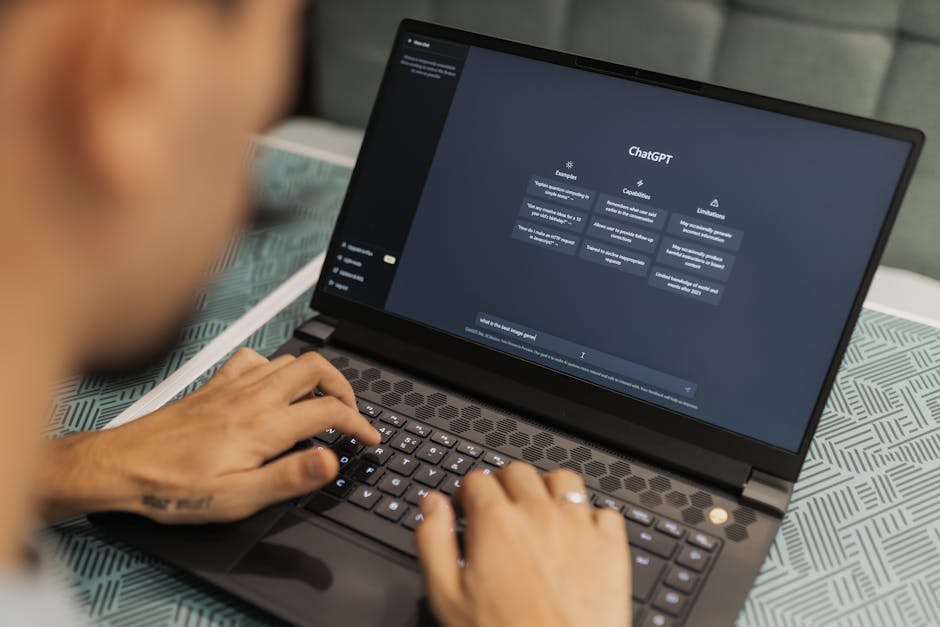
How to Prevent Company Data Leaks in ChatGPT: Rules for Your Team
Protect your company's confidential information when using ChatGPT: specific anonymization rules, corporate plans, and a team checklist to prevent data leaks without banning AI.
Read more
How to Verify AI Automation Before Launching Into Production: Acceptance Checklist
Before launching AI automation into production, you need to verify that it works on your data, in your tools, and executes the scenario agreed upon with your company. Here’s the acceptance checklist…
Read more
Signs Your AI Adoption Is Going Off Track: Early Diagnosis for Founders
Spot early signs your AI adoption is off track: 5 concrete indicators a founder can check without technical skills.
Read more