GPT-4
At a glance
- Price per 1M tokens (input)
- $30.00
- Price per 1M tokens (output)
- $60.00
- Context
- 8,192 tokens
- Free access
- yes (see below)
Refreshed daily; data verified September 29, 2026. Published August 12, 2026.
GPT-4 by OpenAI is a large language model designed for businesses and developers who need reliable, nuanced text generation and complex reasoning. It excels at drafting content, summarizing documents, and supporting decision-making workflows. A key differentiator is its native tool calling, which lets the model invoke external functions or APIs to fetch live data, run calculations, or update records, making it suitable for building assistants that interact with enterprise systems. The vendor emphasizes safety and alignment, with extensive testing to reduce harmful outputs, though users should still validate critical outputs.
Specifications & pricing
| Input (per 1M tokens) | $30.00 |
|---|---|
| Output (per 1M tokens) | $60.00 |
| Context window | 8,192 tokens |
| Max output | 4,096 tokens |
| Capabilities | tool calling |
LiteLLM community dataset (MIT), verified September 29, 2026. Official OpenAI pricing.
What GPT-4 would cost on your workload — run it through the cost calculator →
Where to try GPT-4 for free
- OpenAI offers a free chat — ChatGPT (free plan). A vendor's free chat may run a different model from the same family — the exact model is not guaranteed.
Frequently asked questions
What is GPT-4 best used for in a business context?+
It is ideal for tasks that require deep understanding and generation of natural language, such as drafting reports, answering customer queries, and analyzing unstructured text. Its tool calling capability also allows it to integrate with your internal tools, like CRM or database lookups, to provide up-to-date answers or automate workflows.
How do I get started with GPT-4?+
You can access it via OpenAI's API or through partner platforms. Begin by selecting the model in your chosen interface, then set up your authentication. For tool calling, you will need to define the functions or endpoints you want the model to use, and provide clear instructions in your system prompt. OpenAI offers documentation and examples to guide integration.
How does GPT-4 differ from other models in the GPT line?+
Compared to earlier versions, GPT-4 offers improved accuracy, better handling of nuanced instructions, and stronger reasoning across longer text. It also has more refined tool calling, meaning it can more reliably decide when and how to use external functions. Unlike smaller or faster variants, it prioritizes quality over speed, making it suitable for complex tasks where precision matters.
What are the limitations of GPT-4 that I should consider?+
It can occasionally produce plausible but incorrect information, so human review is recommended for high-stakes decisions. It does not have real-time knowledge unless you connect it to live data via tool calling, and it may struggle with highly specialized or niche topics. Additionally, it processes requests sequentially, which can be slower for very large workloads, and it may not fully understand ambiguous or poorly structured prompts.
Compare with others
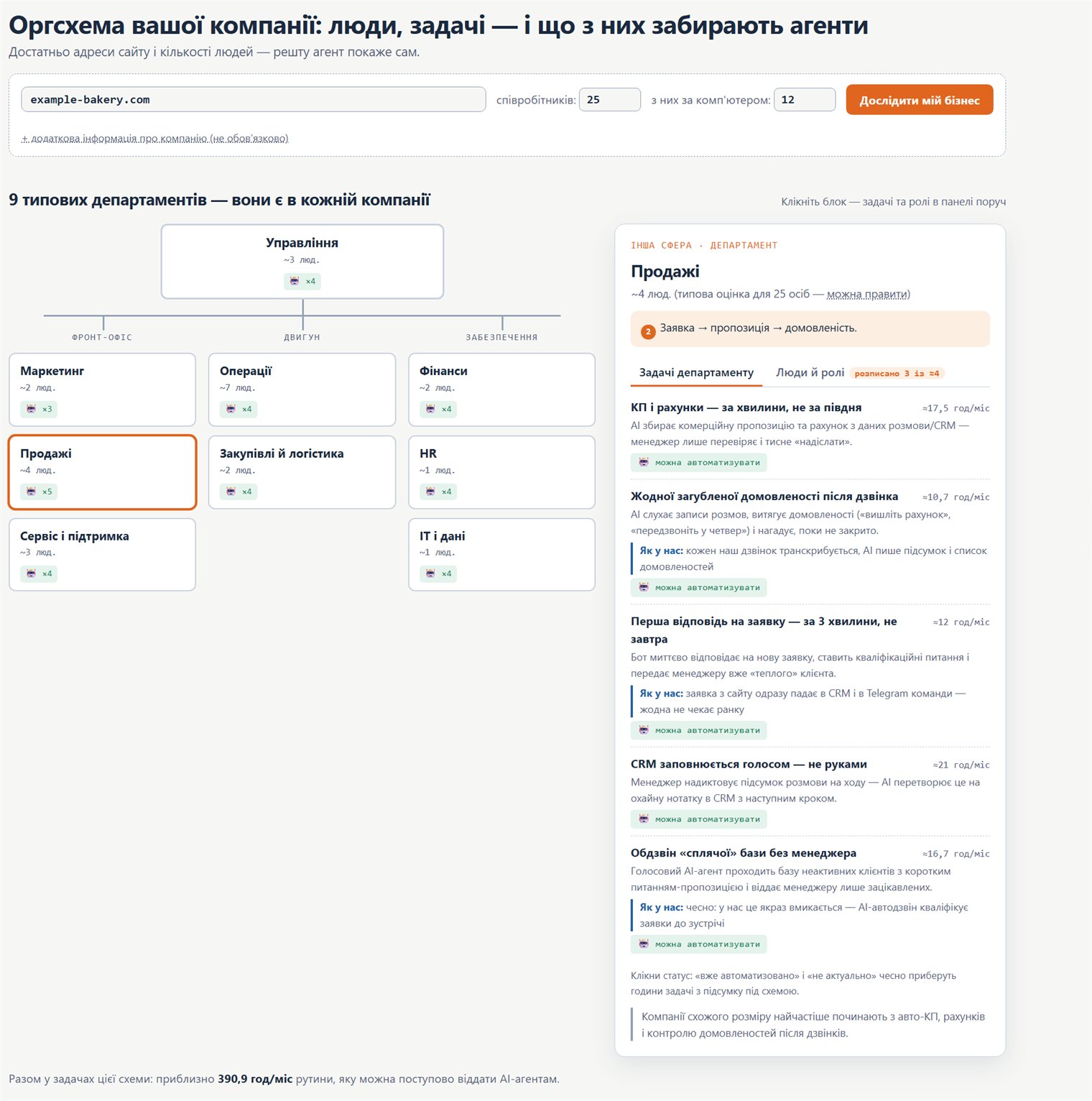
Org chart: how to move your company onto AI
A practical map: which company roles and processes AI agents can take over, where to start, and in what order to roll it out.