GPT-6 Rosalind
At a glance
- Price per 1M tokens (input)
- $15.00
- Price per 1M tokens (output)
- $75.00
- Context
- 922,000 tokens
- Free access
- yes (see below)
Refreshed daily; data verified November 1, 2026. Published November 1, 2026.
GPT-6 Rosalind by OpenAI is designed for developers and business teams that need a model able to interpret images, execute external tools through function calling, and perform multi-step reasoning. It suits tasks such as visual document analysis, workflow automation, and complex problem solving that requires chained logic. OpenAI's approach centers on iterative safety alignment and broad API availability, allowing organizations to integrate the model into existing products with structured guardrails.
Specifications & pricing
| Input (per 1M tokens) | $15.00 |
|---|---|
| Output (per 1M tokens) | $75.00 |
| Cache read (per 1M tokens) | $1.50 |
| Cache write (per 1M tokens) | $18.75 |
| Context window | 922,000 tokens |
| Max output | 128,000 tokens |
| Capabilities | images, tool calling, reasoning |
LiteLLM community dataset (MIT), verified November 1, 2026. Official OpenAI pricing.
What GPT-6 Rosalind would cost on your workload — run it through the cost calculator →
Where to try GPT-6 Rosalind for free
- OpenAI offers a free chat — ChatGPT (free plan). A vendor's free chat may run a different model from the same family — the exact model is not guaranteed.
Frequently asked questions
What is this model good for?+
It is suited for image understanding, tool calling, which means using external functions or APIs to complete actions, and step-by-step reasoning for tasks that require multiple logical stages.
How do I get started?+
Access the model through the OpenAI API, obtain an API key, and send requests using the chat completions endpoint with the model identifier specified in your code.
How does it differ from sibling models?+
This model adds native image understanding and more advanced reasoning capabilities compared with earlier text-only variants in the same family.
What are its limitations?+
It can produce incorrect or fabricated information, may misinterpret complex images, and requires careful prompt design and human review for high-stakes decisions.
Compare with others
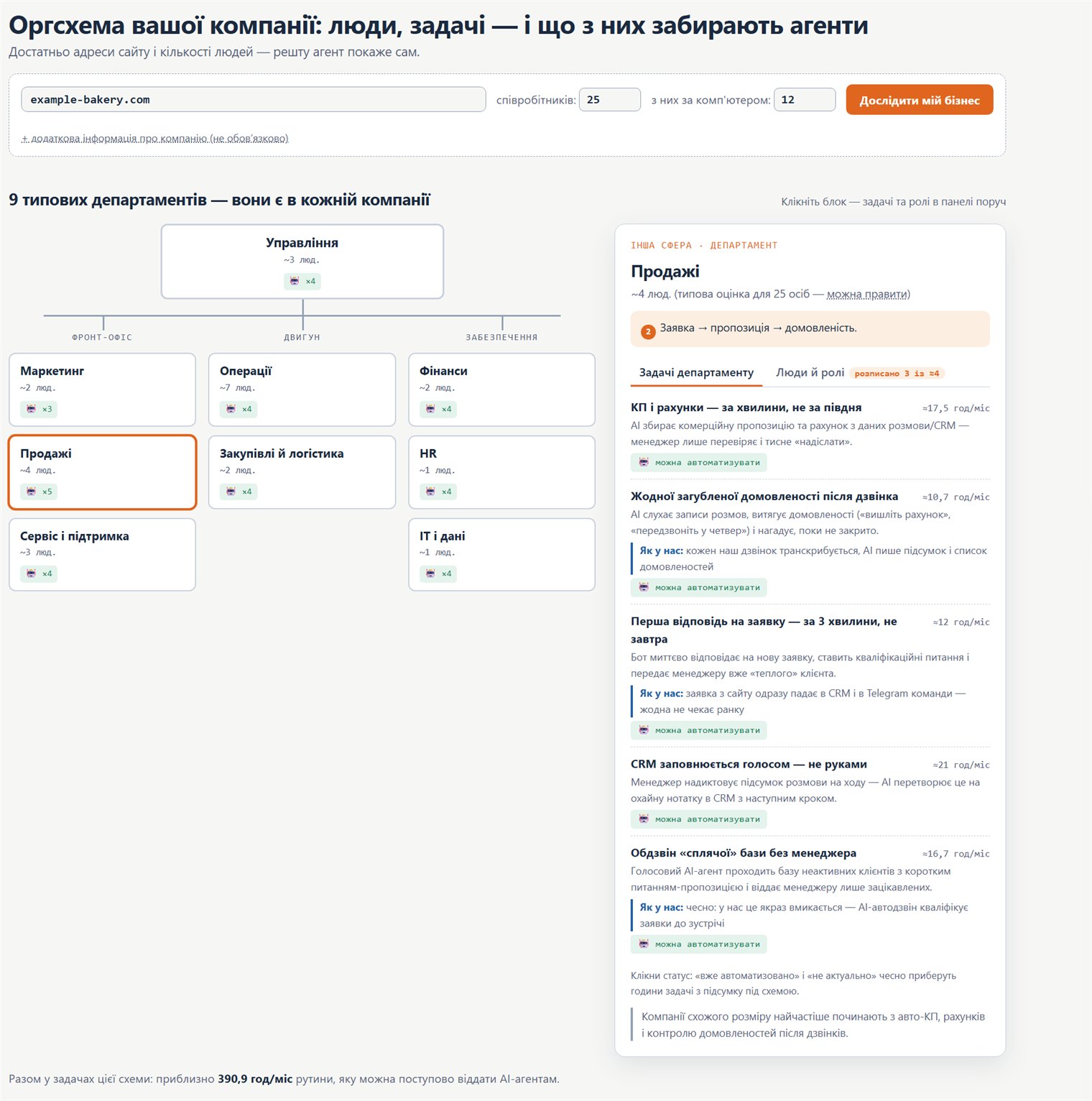
Org chart: how to move your company onto AI
A practical map: which company roles and processes AI agents can take over, where to start, and in what order to roll it out.