Grok 2
At a glance
- Price per 1M tokens (input)
- $2.00
- Price per 1M tokens (output)
- $10.00
- Context
- 131,072 tokens
- Free access
- yes (see below)
Refreshed daily; data verified September 29, 2026. Published August 12, 2026.
Grok 2 by xAI is a large language model designed for technical teams and developers who need to integrate AI into their own applications or workflows. Its standout feature is tool calling, which lets the model invoke external functions or APIs during a conversation, enabling it to fetch live data, run calculations, or trigger actions on your behalf. This makes it well-suited for building agents, automating backend processes, and creating interactive assistants that go beyond static text generation. The vendor emphasizes a direct, engineering-focused approach, prioritizing reliability and deterministic execution of user-defined tools over conversational flourish. For businesses, this means a model that can be wired into existing infrastructure with clear boundaries and predictable behavior.
Specifications & pricing
| Input (per 1M tokens) | $2.00 |
|---|---|
| Output (per 1M tokens) | $10.00 |
| Context window | 131,072 tokens |
| Max output | 131,072 tokens |
| Capabilities | tool calling |
LiteLLM community dataset (MIT), verified August 27, 2026. Official xAI pricing.
What Grok 2 would cost on your workload — run it through the cost calculator →
Where to try Grok 2 for free
- xAI offers a free chat — Grok (limited free access). A vendor's free chat may run a different model from the same family — the exact model is not guaranteed.
Frequently asked questions
What is Grok 2 best used for in a business context?+
Grok 2 excels at tasks that require the model to interact with external systems. Common use cases include customer support bots that query order databases, internal automation that updates records or sends notifications, and data analysis pipelines where the model calls a charting or SQL tool to produce results. It is less about creative writing and more about structured, goal-oriented operations.
How do I get started with Grok 2?+
You access it through xAI's API, which follows a standard REST interface. You define the functions you want the model to call by providing their schemas in your request, then handle the model's responses by executing those functions and returning the results. The official documentation includes code samples for common languages like Python and JavaScript, and you can test in a sandbox environment before going to production.
How does Grok 2 differ from other models in the xAI line?+
The primary distinction is the emphasis on tool calling as a first-class capability, with strict adherence to the function schemas you provide. Sibling models may be optimized for general chat or reasoning without external calls, while Grok 2 is tuned to minimize hallucinated tool invocations and to format its arguments precisely. It also tends to be more verbose in explaining its tool choices, which helps with debugging.
What are the main limitations of Grok 2?+
The model's performance depends heavily on the quality of your function descriptions and schemas—poorly defined tools lead to incorrect calls. It does not handle multi-step planning as robustly as some dedicated agent frameworks, so complex workflows may require you to orchestrate multiple calls. Also, it cannot access real-time data on its own; it only knows what you pass to it via a tool, so you must supply the connectivity.
Compare with others
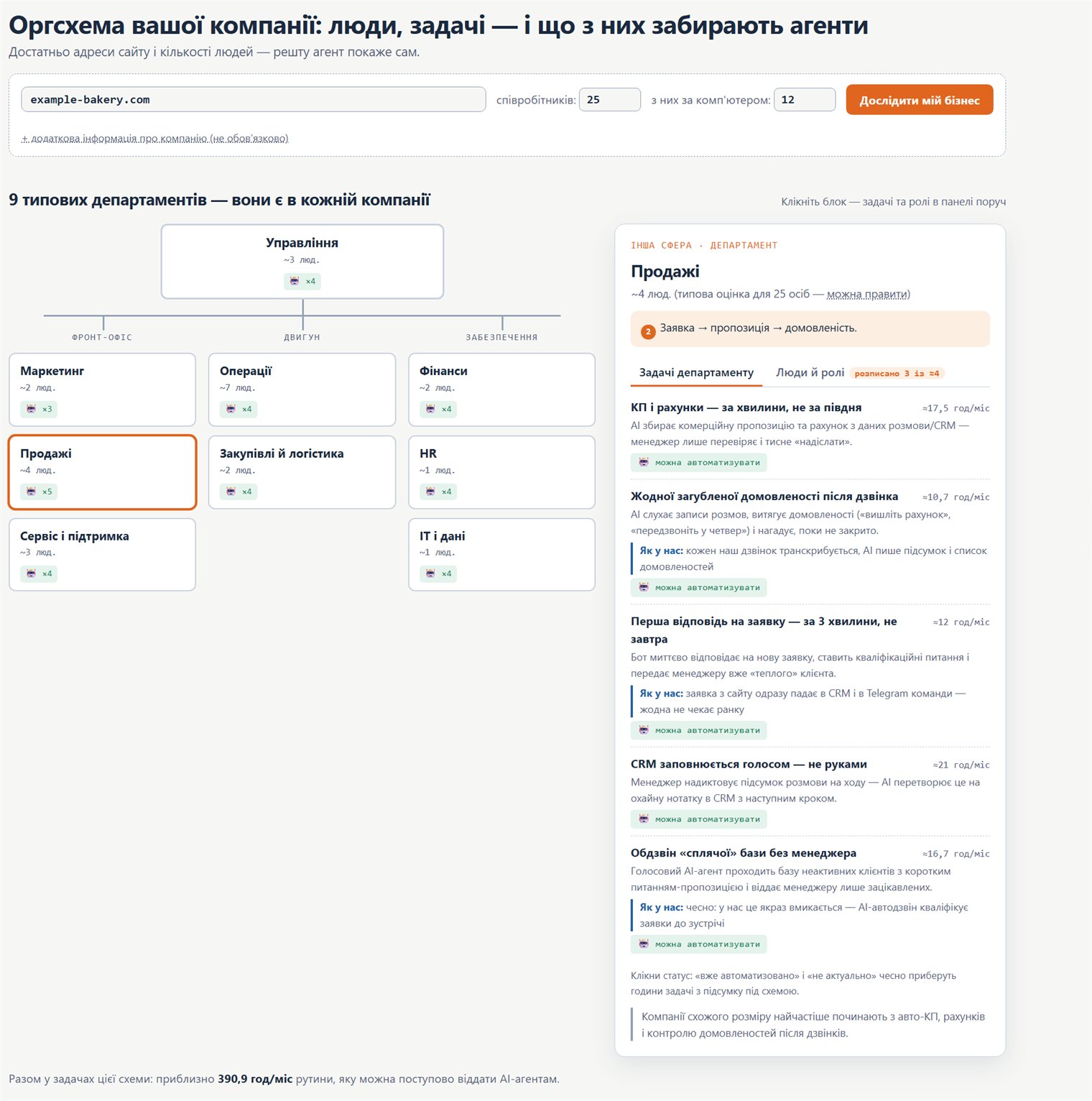
Org chart: how to move your company onto AI
A practical map: which company roles and processes AI agents can take over, where to start, and in what order to roll it out.