Grok 3 Mini Fast Beta
At a glance
- Price per 1M tokens (input)
- $1.25
- Price per 1M tokens (output)
- $2.50
- Context
- 131,072 tokens
- Free access
- yes (see below)
Refreshed daily; data verified September 30, 2026. Published August 12, 2026, last price change August 30, 2026.
Grok 3 Mini Fast Beta is a lightweight, high-speed model from xAI designed for developers and businesses that need responsive, cost-conscious automation without sacrificing reasoning quality. It suits real-time conversational agents, support ticketing triage, and backend workflows where quick, structured actions matter more than verbose prose. Its standout feature is robust tool calling, which lets the model reliably invoke external APIs, databases, or internal functions, paired with step-by-step reasoning that makes its decision paths auditable. xAI's approach emphasizes transparency in inference—each step is traceable—which helps engineering teams debug and trust automated outputs in production. This model is a practical pick for teams already using the broader Grok line but needing a faster, leaner option for high-volume, function-driven tasks.
Specifications & pricing
| Input (per 1M tokens) | $1.25 |
|---|---|
| Output (per 1M tokens) | $2.50 |
| Cache read (per 1M tokens) | $0.20 |
| Context window | 131,072 tokens |
| Max output | 131,072 tokens |
| Capabilities | tool calling, reasoning |
LiteLLM community dataset (MIT), verified September 22, 2026. Official xAI pricing.
What Grok 3 Mini Fast Beta would cost on your workload — run it through the cost calculator →
Price history
| Date | Input / 1M | Output / 1M |
|---|---|---|
| August 9, 2026 (first record) | $0.60 | $4.00 |
| August 30, 2026 | $1.25 | $2.50 |
Where to try Grok 3 Mini Fast Beta for free
- xAI offers a free chat — Grok (limited free access). A vendor's free chat may run a different model from the same family — the exact model is not guaranteed.
Frequently asked questions
What is this model best used for in a business context?+
It is ideal for tasks that require structured output and external actions, such as parsing user requests, calling internal tools or third-party APIs, updating records, or routing tickets. Its speed makes it suitable for interactive applications where latency matters, and its step-by-step reasoning helps in scenarios like multi-step data lookups or simple decision trees.
How do I get started with integrating it into my application?+
You access it through xAI's API, similar to other Grok models. You define the functions or tools you want the model to call, then send a prompt that includes the user request and the tool schemas. The model will respond either with a direct answer or a structured tool call, which your application executes and returns the result for further processing.
How does this model differ from other Grok models in the line?+
This 'Mini Fast Beta' variant prioritizes lower latency and higher throughput, making it a better fit for high-frequency, simpler interactions. Sibling models in the Grok family typically offer deeper reasoning or broader knowledge at the cost of speed. This one trades some depth for agility, so it is not meant for complex long-form analysis but excels at quick, reliable function execution.
What are the main limitations I should be aware of?+
Its reasoning is shallower than the full-size Grok models, so it may struggle with nuanced multi-step problems that require extensive context or creative synthesis. It is also in beta, meaning occasional instability or unexpected tool-call formats may occur, so you should implement fallback handling. Finally, it relies on the tools you provide—if your function definitions are vague, the model's accuracy drops.
Compare with others
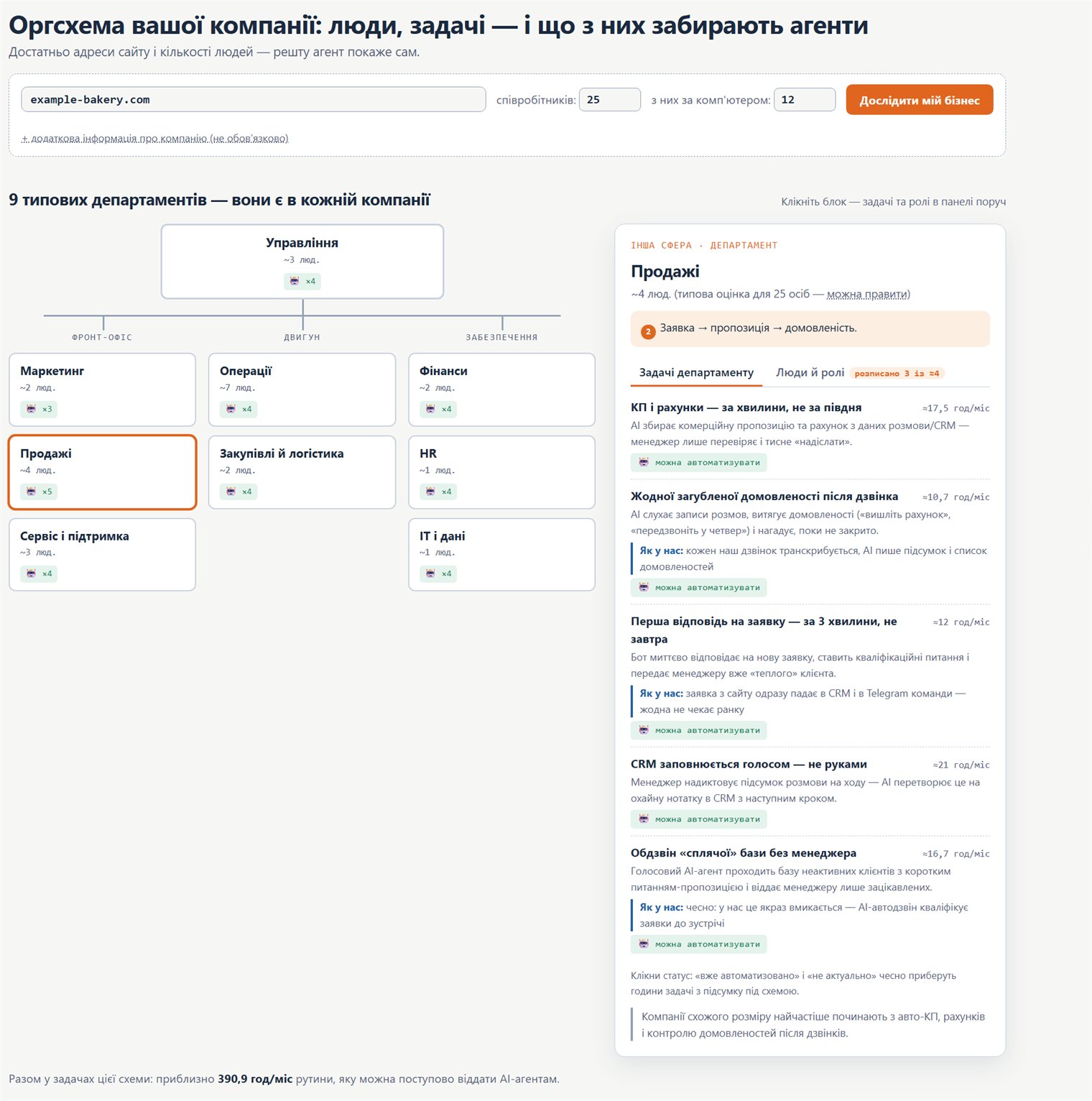
Org chart: how to move your company onto AI
A practical map: which company roles and processes AI agents can take over, where to start, and in what order to roll it out.