Grok 4.1 Fast Non Reasoning
At a glance
- Price per 1M tokens (input)
- $1.25
- Price per 1M tokens (output)
- $2.50
- Context
- 2,000,000 tokens
- Free access
- yes (see below)
Refreshed daily; data verified September 30, 2026. Published August 12, 2026, last price change August 30, 2026.
Grok 4.1 Fast Non Reasoning is designed for developers and enterprises that need rapid, high-throughput responses without the latency of deep chain-of-thought processing. It suits tasks like real-time data extraction, classification, and interactive agent workflows where speed matters more than extended deliberation. The model combines image understanding with tool calling, enabling it to parse visual inputs and trigger external functions or APIs in a single pass. xAI's approach here prioritizes efficiency and deterministic behavior, making it a practical choice for production pipelines that require consistent, low-overhead inference. This variant is for teams that want a responsive workhorse model rather than a reflective reasoning engine.
Specifications & pricing
| Input (per 1M tokens) | $1.25 |
|---|---|
| Output (per 1M tokens) | $2.50 |
| Cache read (per 1M tokens) | $0.20 |
| Context window | 2,000,000 tokens |
| Max output | 2,000,000 tokens |
| Capabilities | images, tool calling |
LiteLLM community dataset (MIT), verified September 22, 2026. Official xAI pricing.
What Grok 4.1 Fast Non Reasoning would cost on your workload — run it through the cost calculator →
Price history
| Date | Input / 1M | Output / 1M |
|---|---|---|
| August 9, 2026 (first record) | $0.20 | $0.50 |
| August 30, 2026 | $1.25 | $2.50 |
Where to try Grok 4.1 Fast Non Reasoning for free
- xAI offers a free chat — Grok (limited free access). A vendor's free chat may run a different model from the same family — the exact model is not guaranteed.
Frequently asked questions
What is this model best used for in a business context?+
It is ideal for high-volume, latency-sensitive operations such as parsing screenshots or documents for key fields, routing customer inquiries to the right system, or executing simple actions like creating a ticket or updating a record via tool calling. Its image understanding lets you extract structured data from photos or diagrams, while its fast response keeps user-facing interactions snappy. It is less suited for complex multi-step problem solving or deep analytical writing.
How do I get started with integrating it for tool calling?+
You begin by defining a set of functions in your application, such as a database lookup or a calendar booking API, and then describe those functions to the model in your system prompt. When you send a user request, the model returns a structured call to one of those functions instead of plain text, and your code executes it and sends the result back for a final response. Most LLM frameworks and SDKs have built-in helpers for this pattern, so you can test with a simple example like a weather lookup before scaling up.
How does this model differ from the other Grok variants in the line?+
The main difference is the trade-off between speed and depth. The non-reasoning variant here skips the step-by-step internal deliberation that other Grok models use, which makes it faster and more predictable for straightforward tasks but less capable at complex logic, math, or nuanced planning. It also shares the same tool calling and vision interfaces, so you can swap it in for simpler subtasks while reserving the reasoning models for harder problems. This makes it a complementary piece in a multi-model architecture rather than a replacement.
What are the practical limitations I should know about before deploying?+
Because it does not engage in extended reasoning, it may produce confident but incorrect answers on ambiguous or multi-step queries, so you should validate outputs for high-stakes decisions. Its image understanding is strong for structured content like forms or charts, but it can struggle with very cluttered or low-quality images. Also, while tool calling is reliable, you need to handle edge cases where the model misformats a call or chooses the wrong function, so build in error handling and fallback prompts. Finally, it is not designed for creative writing or nuanced conversation, where a slower, more reflective model would perform better.
Compare with others
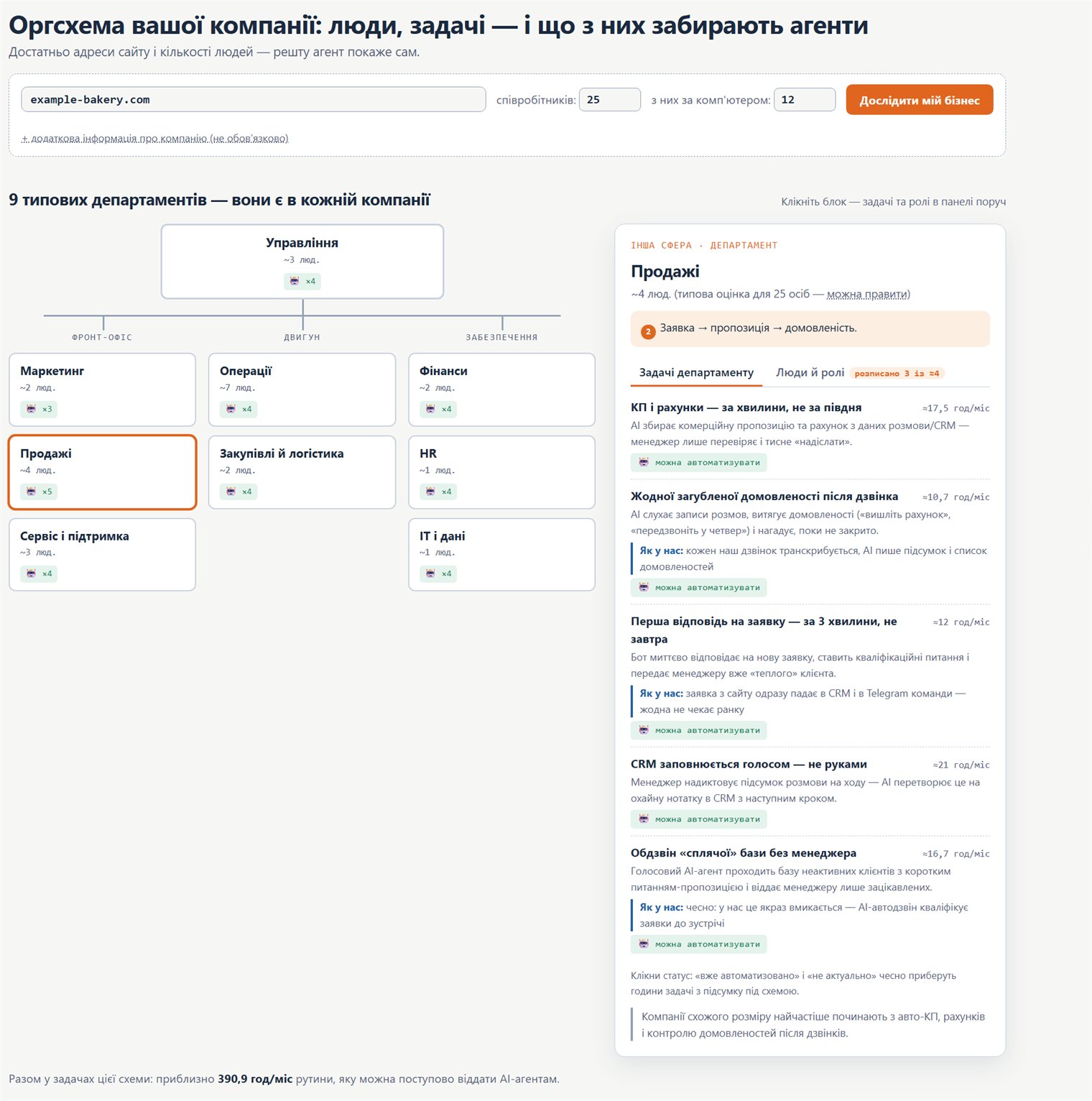
Org chart: how to move your company onto AI
A practical map: which company roles and processes AI agents can take over, where to start, and in what order to roll it out.