GPT-6.1 Sol
At a glance
- Price per 1M tokens (input)
- $2.00
- Price per 1M tokens (output)
- $10.00
- Context
- 922,000 tokens
- Free access
- yes (see below)
Refreshed daily; data verified October 1, 2026. Published October 1, 2026.
GPT-6.1 Sol by OpenAI is designed for developers and enterprises building applications that require both visual input processing and dynamic interaction with external systems. It supports image understanding, enabling the model to interpret and reason about visual content alongside text, and tool calling, which allows it to invoke predefined functions or APIs to perform actions like retrieving data or updating records. The model also emphasizes step-by-step reasoning, making it well-suited for complex, multi-stage tasks such as troubleshooting workflows, analyzing documents with embedded diagrams, or guiding users through procedural decisions. OpenAI's approach focuses on integrating perception, action, and logical reasoning within a unified framework to reduce the need for complex orchestration layers in AI-powered applications.
Specifications & pricing
| Input (per 1M tokens) | $2.00 |
|---|---|
| Output (per 1M tokens) | $10.00 |
| Cache read (per 1M tokens) | $0.10 |
| Cache write (per 1M tokens) | $2.50 |
| Context window | 922,000 tokens |
| Max output | 128,000 tokens |
| Capabilities | images, tool calling, reasoning |
LiteLLM community dataset (MIT), verified October 1, 2026. Official OpenAI pricing.
What GPT-6.1 Sol would cost on your workload — run it through the cost calculator →
Where to try GPT-6.1 Sol for free
- OpenAI offers a free chat — ChatGPT (free plan). A vendor's free chat may run a different model from the same family — the exact model is not guaranteed.
Frequently asked questions
What types of tasks is GPT-6.1 Sol best suited for?+
It is ideal for applications that combine visual analysis with interactive workflows, such as processing scanned forms with handwritten notes, interpreting schematics for maintenance guidance, or enabling agents to navigate software interfaces by understanding screenshots and acting on them through available tools.
How does tool calling work in this model?+
Tool calling allows the model to request the execution of specific functions defined by the developer, such as querying a database or sending an email, by generating a structured call that the application can then run and return results to the model for further reasoning.
How does GPT-6.1 Sol differ from earlier models in the GPT-6 series?+
Unlike prior versions that focused primarily on text or basic vision, this model tightly integrates image understanding with function use and logical chaining, enabling more autonomous behavior in environments where perception, action, and reasoning must occur in sequence.
What are current limitations users should be aware of?+
The model may struggle with highly specialized visual domains not well represented in training data, and tool use depends entirely on the quality and clarity of the functions provided by the developer; incorrect or ambiguous tool definitions can lead to failed actions or flawed reasoning.
Compare with others
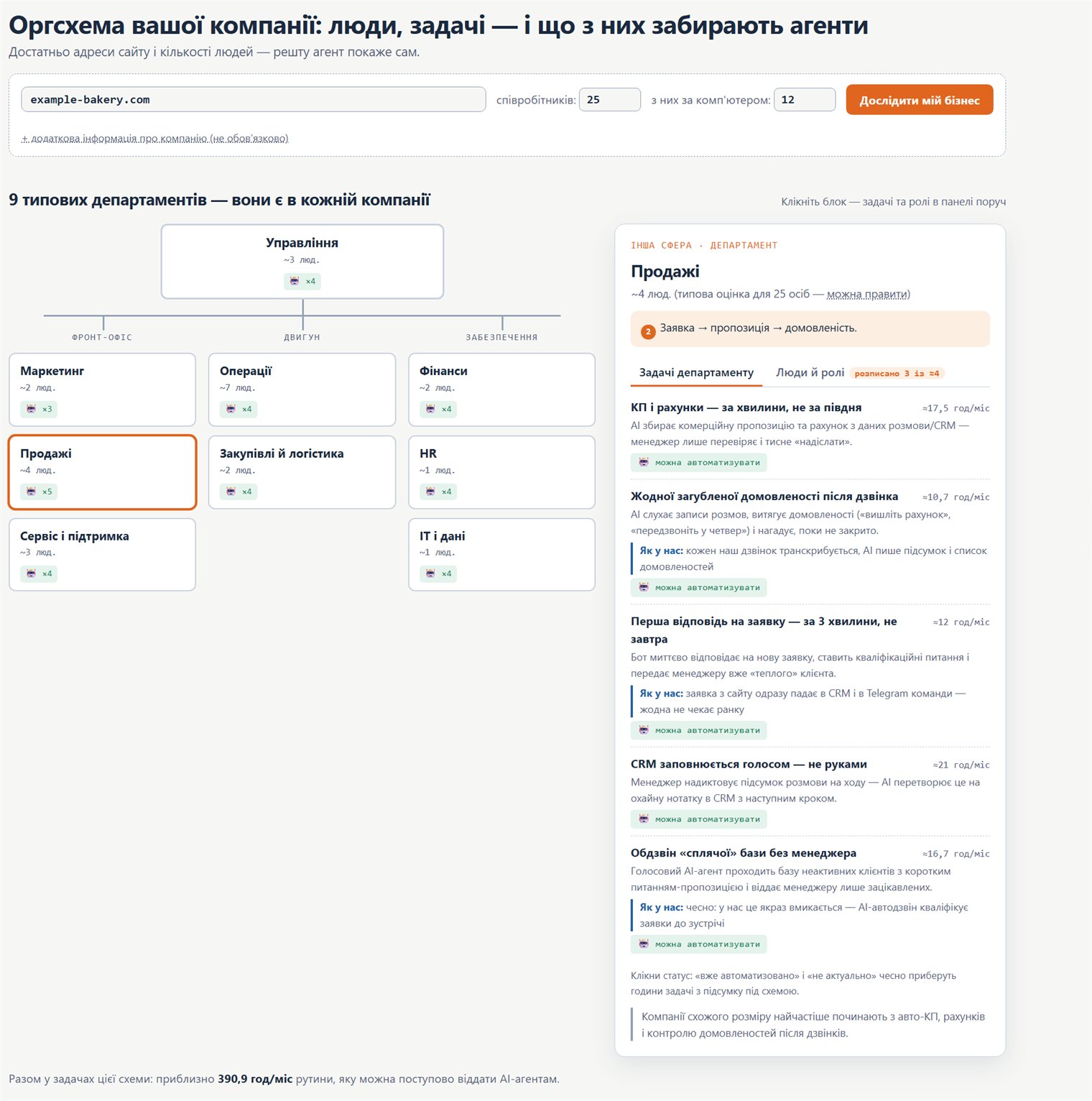
Org chart: how to move your company onto AI
A practical map: which company roles and processes AI agents can take over, where to start, and in what order to roll it out.