GPT-6.2 Sol
At a glance
- Price per 1M tokens (input)
- $2.00
- Price per 1M tokens (output)
- $10.00
- Context
- 922,000 tokens
- Free access
- yes (see below)
Refreshed daily; data verified November 20, 2026. Published November 19, 2026.
GPT-6.2 Sol by OpenAI is designed for teams that need a language model capable of visual interpretation, structured tool use, and transparent reasoning. It suits tasks such as analyzing uploaded images, connecting to external services through function calling, and working through multi-step problems with visible intermediate steps. OpenAI's approach centers on aligning model behavior with safety guidelines while exposing the reasoning process so users can verify how conclusions are reached. This makes the model appropriate for organizations that require auditability alongside multimodal and tool-enabled capabilities.
Specifications & pricing
| Input (per 1M tokens) | $2.00 |
|---|---|
| Output (per 1M tokens) | $10.00 |
| Cache read (per 1M tokens) | $0.10 |
| Cache write (per 1M tokens) | $2.50 |
| Context window | 922,000 tokens |
| Max output | 128,000 tokens |
| Capabilities | images, tool calling, reasoning |
LiteLLM community dataset (MIT), verified November 20, 2026. Official OpenAI pricing.
What GPT-6.2 Sol would cost on your workload — run it through the cost calculator →
Where to try GPT-6.2 Sol for free
- OpenAI offers a free chat — ChatGPT (free plan). A vendor's free chat may run a different model from the same family — the exact model is not guaranteed.
Frequently asked questions
What is this model good for?+
It is useful for interpreting images, executing external functions through tool calling, and completing tasks that require step-by-step reasoning. Tool calling means the model can request specific actions from your software, such as querying a database or sending a message, rather than only generating text.
How do I get started?+
Access the model through OpenAI's platform, prepare your image inputs or function definitions, and send requests using the standard API format. You will need an account and an API key to begin sending prompts.
How does it differ from sibling models?+
This model combines image understanding with tool calling and explicit reasoning in a single system. Other models in the line may offer text-only generation, limited vision capabilities, or different reasoning styles without the same tool integration.
What are its limitations?+
The model can misinterpret complex images, produce incorrect tool calls, or generate plausible but inaccurate reasoning steps. It should not be used for fully automated decisions without human review, especially in high-stakes domains.
Compare with others
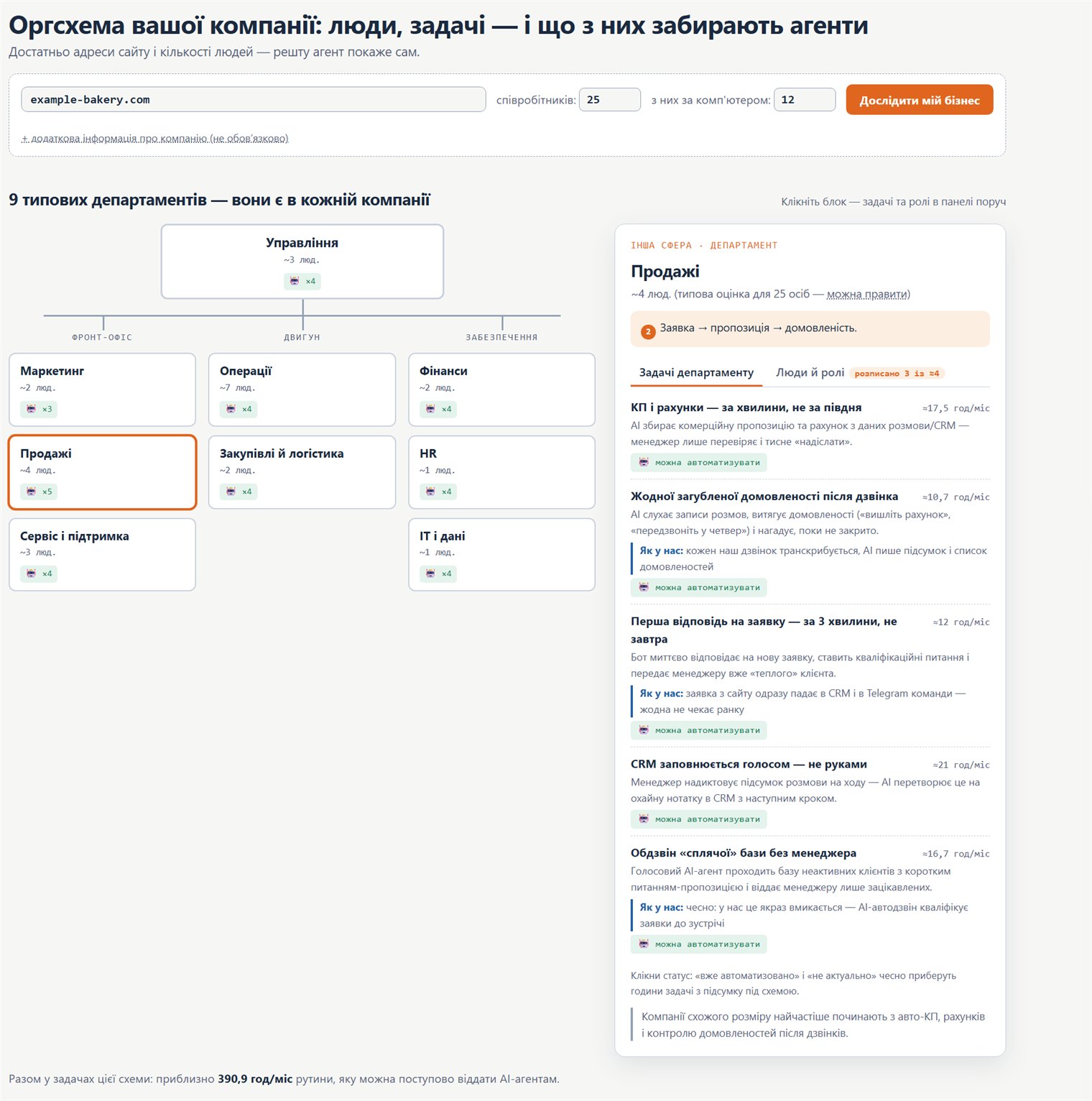
Org chart: how to move your company onto AI
A practical map: which company roles and processes AI agents can take over, where to start, and in what order to roll it out.