GPT-6 Luna
At a glance
- Price per 1M tokens (input)
- $0.10
- Price per 1M tokens (output)
- $0.50
- Context
- 922,000 tokens
- Free access
- yes (see below)
Refreshed daily; data verified September 26, 2026. Published September 26, 2026.
GPT-6 Luna by OpenAI is designed for developers and technical teams building applications that require both visual input processing and interactive workflow automation. It excels at tasks such as interpreting diagrams or screenshots to generate actionable insights, invoking external functions or APIs based on user intent, and performing multi-step logical reasoning to solve complex problems. Unlike earlier models in the series, Luna integrates image understanding natively with function calling and chain-of-thought reasoning, allowing seamless transitions between perceiving visual data, deciding on actions, and executing them through tools. This makes it particularly suited for intelligent agents in domains like technical support, data analysis workflows, and automated quality inspection where perception, decision, and action must be tightly coupled.
Specifications & pricing
| Input (per 1M tokens) | $0.10 |
|---|---|
| Output (per 1M tokens) | $0.50 |
| Cache read (per 1M tokens) | $0.01 |
| Cache write (per 1M tokens) | $0.13 |
| Context window | 922,000 tokens |
| Max output | 128,000 tokens |
| Capabilities | images, tool calling, reasoning |
LiteLLM community dataset (MIT), verified September 26, 2026. Official OpenAI pricing.
What GPT-6 Luna would cost on your workload — run it through the cost calculator →
Where to try GPT-6 Luna for free
- OpenAI offers a free chat — ChatGPT (free plan). A vendor's free chat may run a different model from the same family — the exact model is not guaranteed.
Frequently asked questions
What types of tasks is GPT-6 Luna best suited for?+
GPT-6 Luna is ideal for applications that need to understand visual content, make decisions based on that understanding, and then take actions using external tools or APIs. Examples include analyzing product images to trigger inventory updates, reading handwritten forms to initiate data entry workflows, or interpreting circuit diagrams to suggest repair steps. Its strength lies in closing the loop between perception and action in automated systems.
How does a developer get started with using GPT-6 Luna in an application?+
To begin using GPT-6 Luna, developers access it through OpenAI's API by specifying the model name in their requests. Inputs can include both text and images, and the model can be instructed to use available tools via the function calling interface. No special setup is required beyond standard API authentication and defining the tools the model may call, such as database queries or third-party services.
How does GPT-6 Luna differ from other models in the GPT-6 series?+
While other GPT-6 variants may prioritize text generation speed or linguistic nuance, Luna is specifically optimized for multimodal reasoning that combines image input with tool use and step-by-step logic. It places equal weight on interpreting visual information, planning actions through function calls, and validating outcomes via intermediate reasoning steps, making it more suitable for agent-like behaviors than pure language tasks.
What are the current limitations of GPT-6 Luna that users should be aware of?+
GPT-6 Luna may struggle with highly specialized or low-contrast images where fine details are critical, and its tool use depends entirely on the quality and clarity of the provided function definitions. Additionally, while it can reason step by step, it does not guarantee correctness in complex logical chains and may require validation in high-stakes applications. Users should implement fallback mechanisms and human oversight where accuracy is essential.
Compare with others
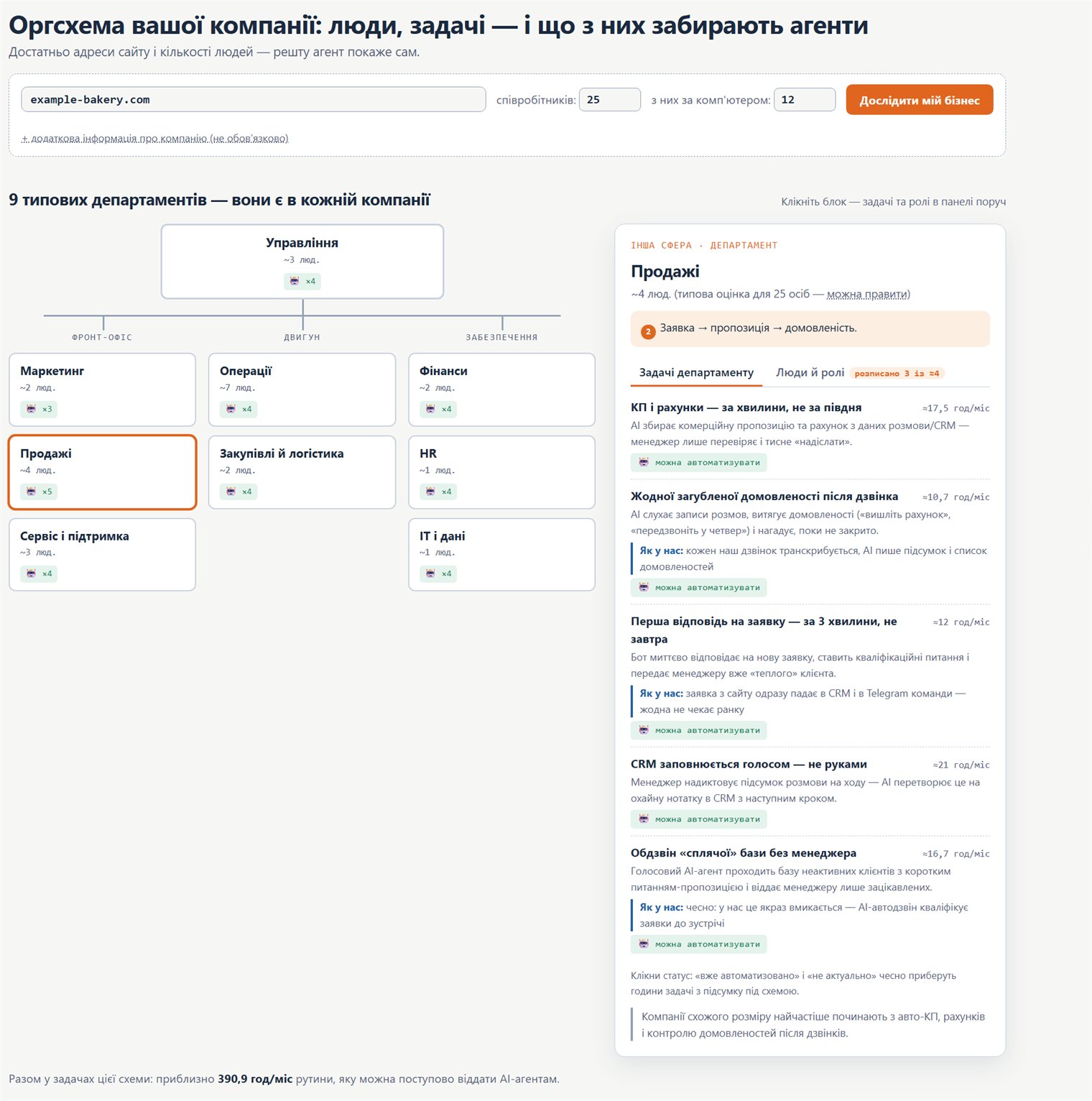
Org chart: how to move your company onto AI
A practical map: which company roles and processes AI agents can take over, where to start, and in what order to roll it out.